
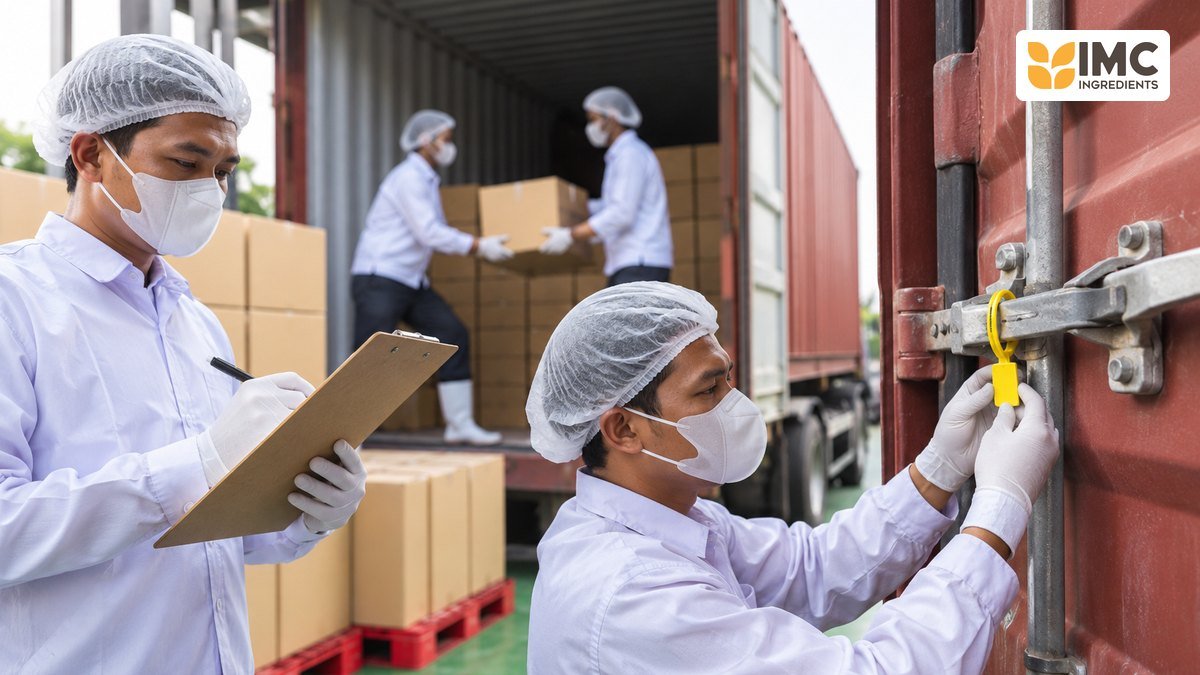
Quick answer: Every export container is closed with a numbered seal after loading. The seal number is written on the shipping documents, so the buyer can check on arrival that the container was not opened on the way. If the seal is intact and the number matches, the cargo has very likely not been touched since it left the factory.
Key takeaways – Each container gets a unique numbered seal. – The number appears on the bill of lading and packing list. – Buyers check the seal before opening. – A mismatch must be reported before unloading.
Why seals matter
Food ingredients travel for weeks through ports, ships and trucks. A container seal is a simple tool that shows whether anyone has opened the doors. It protects against theft, contamination and tampering, and it gives both seller and buyer evidence if a dispute arises.
Types of seals
| Seal type | Description | Typical use |
|---|---|---|
| Bolt seal | Steel bolt with locking barrel | Most sea containers |
| Cable seal | Steel cable with lock | Some containers and trucks |
| Plastic seal | Pull-tight plastic tag | Light security, inner doors |
| Electronic seal | Seal with tracking device | High-value or sensitive cargo |
Sea freight containers usually use high-security bolt seals that must be cut to open.
Seal process at loading
- Inspect the empty container for damage, odour and cleanliness.
- Load the goods and record the loading.
- Close the doors.
- Apply the seal and photograph it with the number visible.
- Record the seal number on loading documents.
- Share the number with the forwarder and buyer.
Checks on arrival
Before opening, the buyer or their agent checks that the seal is intact and the number matches the documents. Take a photo of the seal before cutting it. Customs or inspection authorities may also open containers and apply a new seal; their records should explain the change.
What if the seal is different
Do not unload straight away. Photograph the seal and container, inform the forwarder, insurer and supplier, and ask whether customs opened the container. Check the goods carefully for damage or missing items, and record everything.
Seals and food safety
Food safety standards expect companies to protect products from deliberate contamination. Seal control is part of this. Keep a seal log, store unused seals securely and train loading staff in the procedure.
Keeping a seal log
A seal log lists each seal number, the date it was issued, the container number and the person who applied it. Unused seals are counted regularly. This simple record makes it easy to answer questions from buyers, auditors or insurers months after shipment.
Where does IMC fit?
PT Integral Mulia Cipta (IMC Group) has produced coconut sugar in Central Java, Indonesia, since 2012. IMC exports mesh 14 and mesh 50 coconut sugar, including organic, and shares shipment documents, including container and seal details, with buyers.
FAQ
Where can I find the seal number? On the bill of lading, packing list or loading report.
What if customs opened the container? Customs records should show the new seal number.
Should I photograph the seal? Yes, before cutting it.
What if the seal is broken? Do not unload; inform the forwarder, insurer and supplier.
PT Integral Mulia Cipta (IMC Group) has produced organic coconut sugar in Central Java, Indonesia, since 2012. For specifications or samples, email info@organic-coconut-sugar.com or WhatsApp +62 821 1348 5564.