
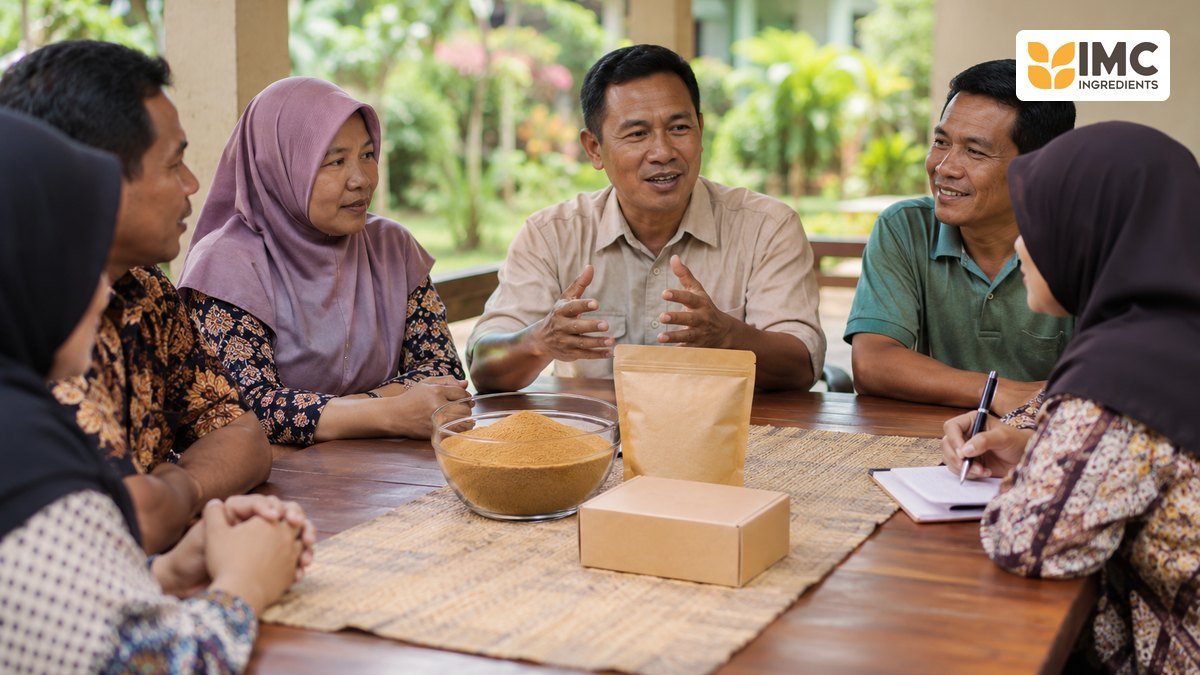
Quick answer: Export demand for coconut sugar connects rural villages with food companies worldwide. Steady orders can support regular income, local jobs and investment in tools and training. Sudden changes in demand can create uncertainty. Long-term relationships and clear communication help villages benefit from export markets.
Key takeaways – Export demand links villages to global markets. – Steady orders support income and planning. – Sudden drops in demand create risk. – Long-term relationships spread the benefits.
From village to export
Coconut sugar starts in villages, where tappers collect sap and families cook it. Farmer groups or collectors bring the product to factories, where it is dried, sieved, packed and exported. Each step creates work locally.
How demand affects villages
| Situation | Possible effect |
|---|---|
| Steady demand | Regular income, planning possible |
| Growing demand | More households join, more work |
| Falling demand | Lower income, uncertainty |
| Quality requirements | Training needs, better tools |
| Certification demand | Organic group management, records |
Benefits of export markets
- Access to buyers beyond the local market.
- Incentives to improve quality and hygiene.
- Organic certification opportunities.
- Support from partners for training and tools.
Risks and responsibilities
Export markets can be volatile. Prices, currency changes and buyer trends affect demand. Suppliers and buyers share responsibility to communicate early, plan volumes and avoid sudden cuts that hurt households.
IMC’s CSR context
IMC sources from farmer communities in Central Java. CSR activities include tool renewal with PUR Projet in 2023 in Banyumas, Purbalingga, Cilacap and Kebumen, and a GIZ develoPPP partnership since 2025 covering training, safer work, organic certification and dwarf coconut.
What buyers can do
Share realistic forecasts, keep long-term contracts where possible, pay on time and support supplier programmes. Ask suppliers how they communicate with farmer groups about changes in demand.
Avoiding simplistic stories
Marketing stories about villages should be accurate. Avoid invented anecdotes or quotes. Describe real programmes and use photos with consent.
Looking ahead
As more food companies look for traceable natural ingredients, demand for coconut sugar may continue to develop. Villages that are organised in groups, keep good records and maintain quality are better placed to benefit from this demand.
Quality as a shared goal
Export buyers expect consistent quality, clean product and clear documents. Meeting these expectations requires training, good tools and steady communication between factory and farmer groups. When quality improves, the whole chain benefits through fewer rejections and more reliable orders.
Where does IMC fit?
PT Integral Mulia Cipta (IMC Group) has produced coconut sugar in Central Java, Indonesia, since 2012. IMC exports mesh 14 and mesh 50 coconut sugar, including organic, and works with farmer communities through CSR programmes.
FAQ
How does export demand help villages? It supports income, jobs and investment in quality.
What are the risks? Sudden changes in demand and prices.
How can buyers help? Through forecasts, long-term contracts and timely payment.
Should marketing use village stories? Only accurate stories, with consent for photos.
PT Integral Mulia Cipta (IMC Group) has produced organic coconut sugar in Central Java, Indonesia, since 2012. For specifications or samples, email info@organic-coconut-sugar.com or WhatsApp +62 821 1348 5564.