
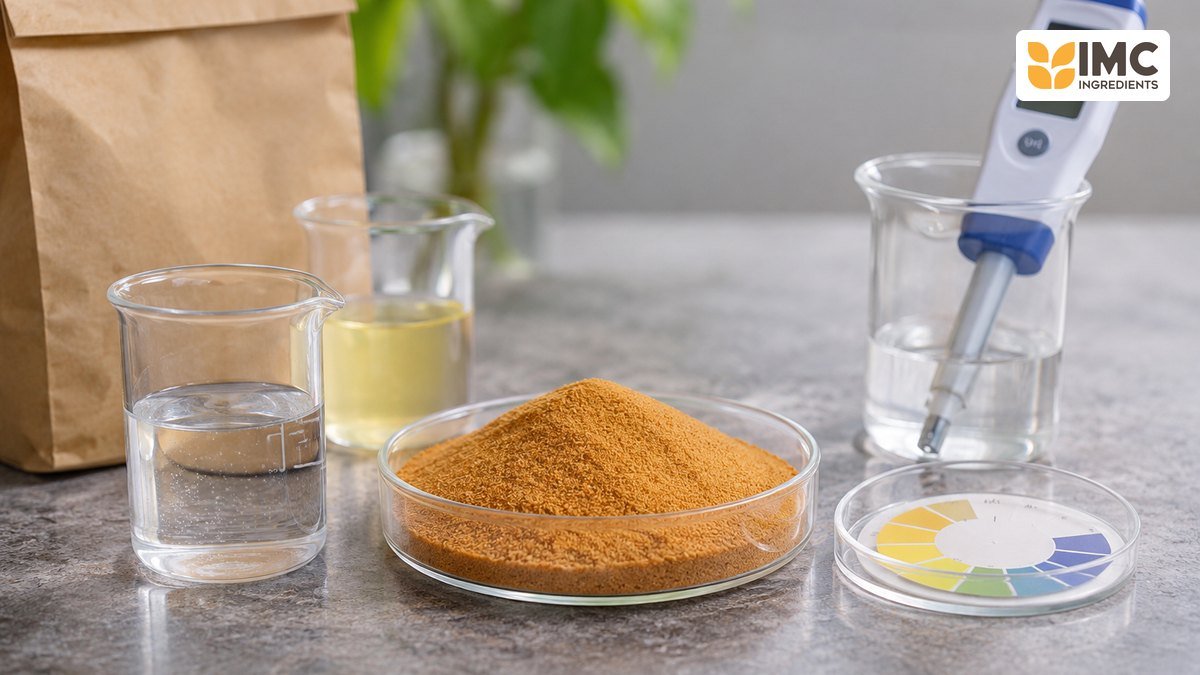
Quick answer: Coconut sugar dissolved in water is usually mildly acidic to near neutral. Its pH matters for beverages, baked goods with leavening and sauces with acid balance. Measure pH on a standard solution, such as 10 percent in distilled water, and agree a range in the specification if it is critical for your product.
Key takeaways – Coconut sugar solutions are usually mildly acidic to near neutral. – pH can vary slightly between lots. – It matters most in drinks and leavened bakery. – Measure on a standard solution for fair comparison.
Why pH matters in formulation
pH affects flavour, colour, microbial stability and how other ingredients behave. In beverages, small pH shifts can change taste and preservative performance. In baking, acidity influences how baking soda reacts. In sauces, pH is part of the safety and shelf life design.
How to measure pH
- Prepare a solution, for example 10 g sugar in 90 g distilled water.
- Stir until fully dissolved.
- Calibrate the pH meter with standard buffers.
- Measure at a set temperature, such as 20 to 25 °C.
- Record the result with the lot number.
Using the same method every time makes results from different lots comparable.
Where pH matters most
| Product | Why pH matters |
|---|---|
| Ready-to-drink beverages | Taste and preservative performance |
| Acidified sauces | Safety and shelf life |
| Cakes and cookies with soda | Leavening reaction and colour |
| Dairy drinks | Protein stability |
| Fermented products | Starting conditions for cultures |
Effects in baking
Because coconut sugar is slightly acidic, it can react a little with baking soda. In most recipes this effect is small. If cakes rise differently after switching sugars, check leavening first. A small adjustment to soda or baking powder may help.
Effects in beverages
Drink formulators usually control pH with acids such as citric acid. Coconut sugar is one input among many. Measure the final drink pH after adding all ingredients and adjust the acid dose rather than relying on sugar alone.
What to ask your supplier
Ask whether pH is tested and what typical range they see. If pH is important for your product, include a range in the specification and request results on the certificate of analysis. Do not assume a figure; base it on test data.
Temperature and pH readings
pH readings change slightly with temperature. Always measure at the same temperature, or use a meter with automatic temperature compensation. Record the temperature with the reading, so results from different days and labs can be compared fairly.
Keeping pH data useful
Store pH results in a simple spreadsheet by lot number and date. Over months, this shows the normal range and makes unusual results easy to spot. Share the trend with your supplier if you see a shift, so both sides can look for the cause.
Where does IMC fit?
PT Integral Mulia Cipta (IMC Group) has produced coconut sugar in Central Java, Indonesia, since 2012. IMC supplies mesh 14 and mesh 50 coconut sugar, including organic, and works with customers on the specification parameters their products need.
FAQ
Is coconut sugar acidic? In solution it is usually mildly acidic to near neutral.
How should I measure pH? On a standard solution with a calibrated meter.
Will it affect my baking soda? Slightly; check leavening if results change.
Can pH be in the specification? Yes, if it matters for your product.
Questions about coconut sugar for your products? PT Integral Mulia Cipta (IMC Group), a Central Java producer since 2012, is happy to help. Email info@organic-coconut-sugar.com or WhatsApp +62 821 1348 5564.