Blog

  • Supplier Visits to a Coconut Sugar Factory

    Supplier Visits to a Coconut Sugar Factory

    Quick answer: A supplier visit lets buyers see how coconut sugar is produced, checked and packed. Plan the visit with clear goals, follow the factory’s hygiene rules, look at key process steps and records, ask practical questions and agree follow-up actions in writing afterwards.

    Key takeaways – Agree goals and agenda before the visit. – Follow hygiene and safety rules on site. – Focus on process steps, records and people. – Write up findings and actions afterwards.

    Why visit

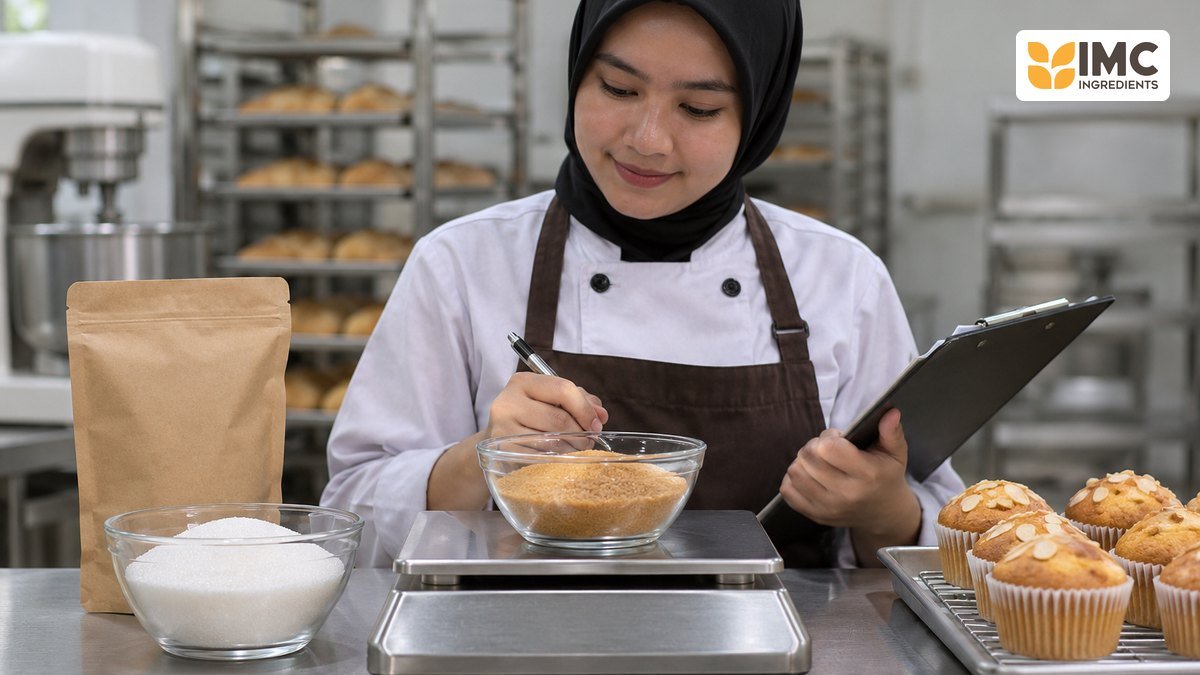
    Documents show a lot, but seeing a factory shows how procedures work in practice. Visits build trust, help both sides understand each other and can speed up supplier approval. Many buyers visit before the first order or once a year after that.

    Planning the visit

    1. Share your goals: approval, audit, product development or relationship.
    2. Agree the date and agenda.
    3. Ask which documents will be available.
    4. Check travel time from the nearest city or airport.
    5. Confirm safety and hygiene requirements.
    6. Agree whether photos are allowed.

    What to see

    Area What to look at
    Raw material receipt How incoming product is checked
    Processing Drying, sieving, cleanliness
    Packing Weighing, sealing, coding
    Warehouse Storage conditions, pallets, rotation
    Laboratory Tests and records
    Staff facilities Handwashing, changing rooms

    Questions to ask

    • How are incoming materials checked?
    • How is moisture controlled?
    • How often are sieves inspected?
    • How are lots coded and traced?
    • How are complaints handled?
    • What training do staff receive?

    Hygiene rules for visitors

    Visitors usually wear hairnets, coats and sometimes masks and shoe covers. Jewellery may need to be removed. Visitors who feel unwell should tell the host. Follow the guide and stay in the agreed areas.

    After the visit

    Write a short report with findings, strengths and points to improve. Share it with the supplier and agree actions and timelines. Keep the report with your supplier approval file.

    Virtual visits

    When travel is not possible, a video tour can show many areas. It does not replace a full audit but helps buyers understand the operation.

    Making the most of the time

    Factory visits are often short. Share your questions in advance so the right people are available. Leave time at the end for a meeting to discuss findings. A clear agenda helps both sides use the visit well.

    Where does IMC fit?

    PT Integral Mulia Cipta (IMC Group) has produced coconut sugar in Central Java, Indonesia, since 2012. IMC welcomes buyer visits by appointment and supplies mesh 14 and mesh 50 coconut sugar, including organic. Contact info@organic-coconut-sugar.com to arrange a visit.

    FAQ

    Do I need to book a visit in advance? Yes, agree the date and agenda beforehand.

    What should I wear? The factory will provide hygiene clothing.

    Can I take photos? Ask first and follow the factory’s rules.

    Is a video tour possible? It can be arranged when travel is not possible.


    Questions about coconut sugar for your products? PT Integral Mulia Cipta (IMC Group), a Central Java producer since 2012, is happy to help. Email info@organic-coconut-sugar.com or WhatsApp +62 821 1348 5564.

  • Supplier Approval Steps for Food Brands

    Supplier Approval Steps for Food Brands

    Quick answer: Food brands approve new ingredient suppliers in steps: a questionnaire, document review, sample testing, sometimes an audit, a trial order and then ongoing monitoring. Each step reduces risk. Clear communication about required documents speeds up the process for both sides.

    Key takeaways – Approval follows a step-by-step process. – Documents and samples come first. – Audits may be on site or remote. – Approval continues with monitoring.

    Why approval is needed

    Food safety standards require brands to control their suppliers. Approval shows that the supplier can deliver safe, legal and consistent products. It also protects the brand from supply interruptions and recalls.

    Typical approval steps

    Step Purpose
    Supplier questionnaire Basic company and process information
    Document review Specifications, certificates, policies
    Sample testing Check quality and fit for use
    Risk assessment Decide audit needs
    Audit On-site or remote check
    Trial order Real delivery under normal conditions
    Approval Supplier added to approved list
    Monitoring Ongoing checks and reviews

    Common documents

    1. Product specification.
    2. Certificate of analysis examples.
    3. Food safety certificates, if held.
    4. Organic certificates for organic products.
    5. Allergen and GMO statements.
    6. Traceability description.
    7. Insurance and company registration.

    Sample testing

    Brands test samples for moisture, colour, particle size, taste and microbiology. Product developers also test the sample in real formulas. It is helpful to keep a reference sample after approval.

    Trial orders

    A small first order tests logistics, packaging, documents and communication. Check the goods on arrival carefully and record any issues.

    Monitoring after approval

    Monitor delivery performance, complaint history and document validity. Ask for updated certificates when they expire. Review high-risk suppliers more often.

    Tips for faster approval

    Send the supplier a full list of required documents at the start. Use one contact person on each side. Agree realistic timelines. Explain any special requirements, such as language or label formats.

    When approval is refused

    Sometimes a supplier does not meet all requirements at first. A clear list of gaps lets the supplier improve and apply again. Good communication keeps the door open for future business.

    Who is involved on the buyer side

    Supplier approval usually involves purchasing, quality assurance and product development. Purchasing checks price, capacity and lead times. Quality reviews documents, certificates and audit results. Product development confirms that the ingredient works in the recipe. Agreeing who signs off at each step avoids delays and makes the decision clear.

    Where does IMC fit?

    PT Integral Mulia Cipta (IMC Group) has produced coconut sugar in Central Java, Indonesia, since 2012. IMC supplies mesh 14 and mesh 50 coconut sugar, including organic, and supports buyer approval with documents and samples on request.

    FAQ

    How long does approval take? It depends on documents, testing and audits.

    Is an audit always needed? Not always; it depends on the risk assessment.

    Why place a trial order? To test real delivery and documents.

    Does approval last forever? No, suppliers are monitored and reviewed.


    IMC Group (PT Integral Mulia Cipta) supplies fine-granule organic coconut sugar from Central Java to food companies worldwide. Talk to our team: info@organic-coconut-sugar.com or WhatsApp +62 821 1348 5564.

  • Sieve Mesh Screens and Their Maintenance

    Sieve Mesh Screens and Their Maintenance

    Quick answer: Sieve mesh screens control the particle size of coconut sugar and remove oversized pieces and foreign matter. They must be inspected before and after each shift, cleaned regularly and replaced when damaged. A torn screen can let lumps or foreign material into the product, so sieve checks are an important food safety control.

    Key takeaways – Sieves set particle size, such as mesh 14 or mesh 50. – They also remove lumps and foreign matter. – Inspect screens before and after use. – Record checks and replace damaged screens.

    What mesh numbers mean

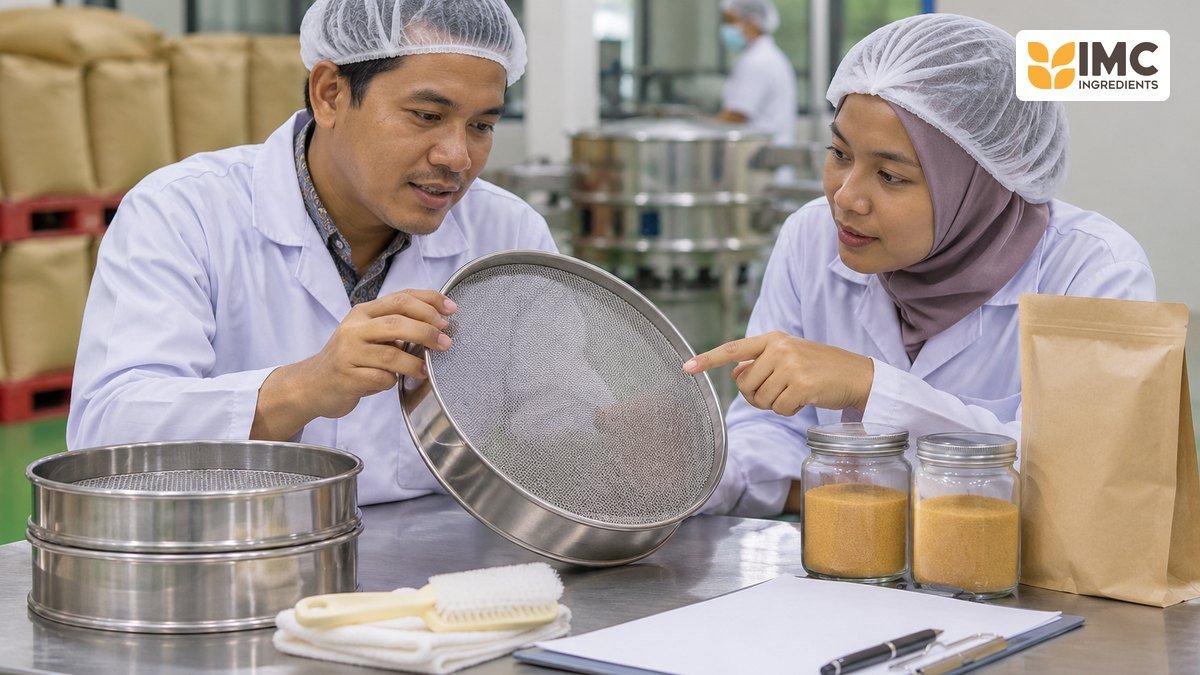
    Mesh number describes how many openings a screen has per inch. A higher mesh number means smaller openings and finer sugar. Mesh 14 gives a coarse sugar, while mesh 50 gives a fine one. Using the right screen is the basis of a consistent product.

    Roles of the sieve

    Role Why it matters
    Particle size control Meets customer specification
    Lump removal Better flow and dissolving
    Foreign matter removal Product safety
    Process check Damaged screen signals a problem

    Inspection routine

    1. Check the screen before the shift starts.
    2. Look for tears, holes, loose edges and stretched mesh.
    3. Check the frame and seals.
    4. Check again at the end of the shift.
    5. Record results with time and signature.

    If a screen is found damaged at the end of a shift, the product sieved since the last good check should be held and assessed.

    Cleaning

    Remove sugar residue with dry brushing where possible. If water cleaning is needed, dry the screen completely before use, as moisture causes sugar to stick and clog the mesh. Follow the cleaning schedule and use food-safe tools only.

    Handling tailings

    Material that stays on top of the screen is called tailings. Check tailings for foreign matter. They can show problems in drying or cooling, such as large lumps. Record findings and handle tailings according to the factory’s procedure.

    Spare screens and replacement

    Keep spare screens of each mesh size in clean storage. Replace screens on a schedule or as soon as damage is found. Label screens clearly so the wrong mesh is not fitted by mistake.

    What buyers can ask

    Buyers can ask how sieve checks are done, how often screens are inspected and what happens when damage is found. These questions are common in supplier audits.

    Training operators

    Operators must know how to fit, check and clean each screen. A short training with photos of good and damaged screens helps staff spot problems quickly. Supervisors check records daily to make sure inspections are done on time.

    Where does IMC fit?

    PT Integral Mulia Cipta (IMC Group) has produced coconut sugar in Central Java, Indonesia, since 2012. IMC sieves its coconut sugar to mesh 14 and mesh 50, including organic, and packs it in paper bags with a food-grade PE liner.

    FAQ

    What does mesh 50 mean? A fine screen with about 50 openings per inch.

    How often should screens be checked? Before and after each shift.

    What happens if a screen is torn? The affected product is held and assessed.

    How are screens cleaned? Mostly dry brushing; any wet cleaning must be fully dried.


    Looking for a reliable coconut sugar partner? Contact PT Integral Mulia Cipta (IMC Group) in Central Java, Indonesia: info@organic-coconut-sugar.com or WhatsApp +62 821 1348 5564.

  • Shipping Marks and Carton Marks

    Shipping Marks and Carton Marks

    Quick answer: Shipping marks are the text and symbols printed on bags or cartons that identify the goods in transit. They usually show the product name, lot code, net and gross weight, origin, buyer reference and handling symbols. Clear, consistent marks help ports, customs and warehouses handle the goods correctly and make traceability easy.

    Key takeaways – Marks identify goods, buyer and lot. – They must match the shipping documents. – Handling symbols protect the product. – Agree mark content with the buyer before production.

    Why shipping marks matter

    A container may hold hundreds of bags. When goods reach the buyer’s warehouse, staff must quickly confirm the product, lot and quantity. Customs officers compare marks with documents. Clear marks avoid delays, mix-ups and disputes.

    Typical content

    Item Example purpose
    Product name Coconut sugar, organic coconut sugar
    Grade Mesh 14 or mesh 50
    Lot or batch code Traceability
    Production and best before dates Stock rotation
    Net and gross weight Checking quantities
    Country of origin Customs requirement
    Buyer name or PO number Easy identification
    Organic logo or code Only if certified
    Handling symbols Keep dry, this way up

    Agreeing marks with the buyer

    Before production, the buyer and supplier agree what will be printed. Some buyers want their purchase order number on each bag. Others want a specific language or label layout. Organic shipments need the correct certification codes. Confirm everything in writing.

    Printing methods

    Marks can be printed directly on bags, stamped, or added as stickers. Printing must be clear, smudge-proof and readable after handling. Ink should not transfer onto the product.

    Matching documents

    The marks should match the commercial invoice, packing list, certificate of analysis and, for organic goods, the certificate of inspection. Even a small difference in a lot code can cause questions at customs.

    Common mistakes

    1. Missing or unreadable lot codes.
    2. Wrong weight on the bag.
    3. Different product names on bags and documents.
    4. Organic logos used without proper certification.
    5. Marks rubbed off during transport.

    Checking marks before loading

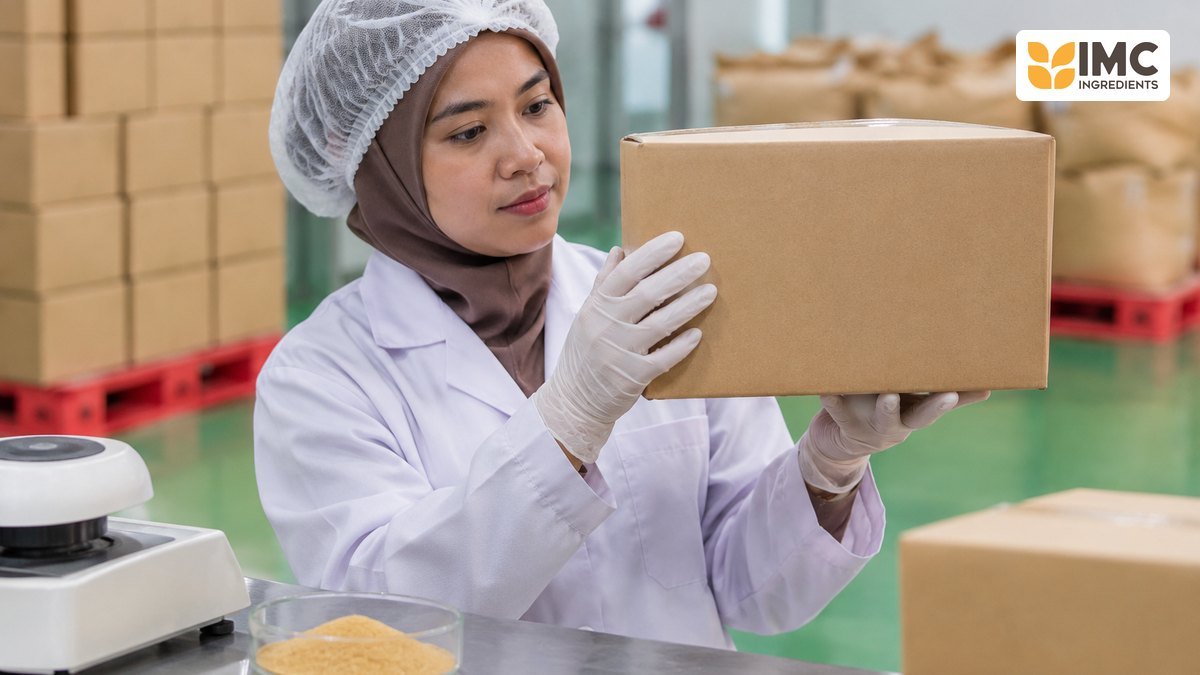
    Before loading, a staff member checks a sample of bags against the packing list. They confirm the product name, lot code, weight and buyer reference. Photos of the marks can be sent to the buyer with the loading report.

    Marks and warehouse handling

    Buyers store goods in warehouses with many other products. Clear marks help warehouse staff place bags in the right location and pick the correct lot later. Large, legible lot codes on at least two sides of a bag make this easier.

    Where does IMC fit?

    PT Integral Mulia Cipta (IMC Group) has produced coconut sugar in Central Java, Indonesia, since 2012. IMC exports mesh 14 and mesh 50 coconut sugar, including organic, and agrees bag marks and documents with each buyer.

    FAQ

    What must a shipping mark include? Usually product, lot, weight, origin and buyer reference.

    Can I ask for my PO number on the bags? Yes, agree this before production.

    Do marks have to match documents? Yes, exactly.

    Can organic logos be printed freely? No, only on certified products.


    IMC Group (PT Integral Mulia Cipta) supplies fine-granule organic coconut sugar from Central Java to food companies worldwide. Talk to our team: info@organic-coconut-sugar.com or WhatsApp +62 821 1348 5564.

  • Seal Numbers and Shipment Security

    Seal Numbers and Shipment Security

    Quick answer: Every export container is closed with a numbered seal after loading. The seal number is written on the shipping documents, so the buyer can check on arrival that the container was not opened on the way. If the seal is intact and the number matches, the cargo has very likely not been touched since it left the factory.

    Key takeaways – Each container gets a unique numbered seal. – The number appears on the bill of lading and packing list. – Buyers check the seal before opening. – A mismatch must be reported before unloading.

    Why seals matter

    Food ingredients travel for weeks through ports, ships and trucks. A container seal is a simple tool that shows whether anyone has opened the doors. It protects against theft, contamination and tampering, and it gives both seller and buyer evidence if a dispute arises.

    Types of seals

    Seal type Description Typical use
    Bolt seal Steel bolt with locking barrel Most sea containers
    Cable seal Steel cable with lock Some containers and trucks
    Plastic seal Pull-tight plastic tag Light security, inner doors
    Electronic seal Seal with tracking device High-value or sensitive cargo

    Sea freight containers usually use high-security bolt seals that must be cut to open.

    Seal process at loading

    1. Inspect the empty container for damage, odour and cleanliness.
    2. Load the goods and record the loading.
    3. Close the doors.
    4. Apply the seal and photograph it with the number visible.
    5. Record the seal number on loading documents.
    6. Share the number with the forwarder and buyer.

    Checks on arrival

    Before opening, the buyer or their agent checks that the seal is intact and the number matches the documents. Take a photo of the seal before cutting it. Customs or inspection authorities may also open containers and apply a new seal; their records should explain the change.

    What if the seal is different

    Do not unload straight away. Photograph the seal and container, inform the forwarder, insurer and supplier, and ask whether customs opened the container. Check the goods carefully for damage or missing items, and record everything.

    Seals and food safety

    Food safety standards expect companies to protect products from deliberate contamination. Seal control is part of this. Keep a seal log, store unused seals securely and train loading staff in the procedure.

    Keeping a seal log

    A seal log lists each seal number, the date it was issued, the container number and the person who applied it. Unused seals are counted regularly. This simple record makes it easy to answer questions from buyers, auditors or insurers months after shipment.

    Where does IMC fit?

    PT Integral Mulia Cipta (IMC Group) has produced coconut sugar in Central Java, Indonesia, since 2012. IMC exports mesh 14 and mesh 50 coconut sugar, including organic, and shares shipment documents, including container and seal details, with buyers.

    FAQ

    Where can I find the seal number? On the bill of lading, packing list or loading report.

    What if customs opened the container? Customs records should show the new seal number.

    Should I photograph the seal? Yes, before cutting it.

    What if the seal is broken? Do not unload; inform the forwarder, insurer and supplier.


    PT Integral Mulia Cipta (IMC Group) has produced organic coconut sugar in Central Java, Indonesia, since 2012. For specifications or samples, email info@organic-coconut-sugar.com or WhatsApp +62 821 1348 5564.

  • SDG 13 and Climate Action for Ingredient Suppliers

    SDG 13 and Climate Action for Ingredient Suppliers

    Quick answer: SDG 13 is the United Nations Sustainable Development Goal on climate action. For ingredient suppliers, it means understanding climate risks in the supply chain, reducing emissions where practical and helping farming communities adapt. Buyers increasingly ask suppliers what they are doing on climate, even when the supplier is small.

    Key takeaways – SDG 13 focuses on climate action and resilience. – Suppliers face both emissions questions and climate risks. – Practical steps matter more than big promises. – Honest reporting builds buyer trust.

    What SDG 13 asks

    SDG 13 calls on countries and organisations to strengthen resilience to climate hazards, include climate measures in planning and improve awareness. For companies, this translates into two questions: how does our business affect the climate, and how does climate change affect our business?

    Climate risks in agricultural supply chains

    Risk Possible effect
    Changing rainfall Lower or uneven raw material supply
    Heat Harder working conditions for farmers
    Floods and landslides Damaged roads and access
    Drought Lower yields and income
    Extreme weather Delays in transport

    Practical actions for suppliers

    1. Map where raw materials come from.
    2. Talk with farmer groups about weather changes they see.
    3. Support farm practices that protect soil and water.
    4. Use energy and fuel efficiently in processing.
    5. Plan logistics to reduce waste and delays.
    6. Keep honest records of what is done.

    Adaptation in farming communities

    Adaptation means helping farmers cope with change. Examples include training on soil care, planting suitable crops, sharing weather information and improving tools. These actions protect livelihoods and supply at the same time.

    IMC’s CSR context

    IMC works with farmer communities in Central Java. Since 2025, a GIZ develoPPP partnership has supported training, safer work, organic certification and dwarf coconut planting. In 2023, a tool renewal programme with PUR Projet provided aluminium pans, strainers, sieves and bamboo containers to farmers in Banyumas, Purbalingga, Cilacap and Kebumen. These are CSR activities rather than climate claims.

    How buyers can review progress

    Buyers can ask suppliers which climate risks they see, what actions are under way and how progress is tracked. Clear, modest answers are more useful than large targets without a plan.

    Avoiding overclaiming

    Climate claims on packs and websites are regulated more strictly in many markets. Suppliers and buyers should avoid words like “climate neutral” unless they are fully backed by verified data.

    Starting small

    Small suppliers do not need a complex climate strategy on day one. A short list of risks, a few practical actions and a yearly review are a good start. Over time, this can grow into a fuller plan with measured data.

    Where does IMC fit?

    PT Integral Mulia Cipta (IMC Group) has produced coconut sugar in Central Java, Indonesia, since 2012. IMC supplies mesh 14 and mesh 50 coconut sugar, including organic, and runs CSR programmes with farmer communities.

    FAQ

    What is SDG 13? The UN goal on climate action.

    Why does it matter to ingredient buyers? Climate affects supply and buyers’ reporting duties.

    What can small suppliers do? Map risks, take practical steps and report honestly.

    Should packs claim climate neutrality? Only with verified data; avoid overclaiming.


    PT Integral Mulia Cipta (IMC Group) has produced organic coconut sugar in Central Java, Indonesia, since 2012. For specifications or samples, email info@organic-coconut-sugar.com or WhatsApp +62 821 1348 5564.

  • Responsible Sourcing Claims on Packs

    Responsible Sourcing Claims on Packs

    Quick answer: Responsible sourcing claims, such as “responsibly sourced” or “supports farmers”, can build trust if they are accurate and backed by evidence. Vague or exaggerated claims can mislead consumers and break advertising rules. Brands should use specific, verifiable wording and keep supporting documents from their suppliers.

    Key takeaways – Claims must be accurate and supported by evidence. – Specific wording is better than vague wording. – Regulators are stricter on green and ethical claims. – Keep supplier documents on file.

    Why claims need care

    Consumers often choose products with ethical claims. Regulators in many markets now check such claims closely. A claim that cannot be proven can lead to complaints, fines or damage to reputation.

    Vague versus specific claims

    Vague claim More specific alternative
    “Ethically sourced” “Made with coconut sugar from a supplier with farmer training programmes”
    “Supports farmers” “Our supplier provided tools to farmer groups in 2023”
    “Sustainable sugar” “Certified organic coconut sugar” (if certified)
    “Eco-friendly” Avoid unless a specific, proven benefit is stated

    Evidence to collect

    1. Supplier statements describing programmes.
    2. Dates, locations and scope of activities.
    3. Certificates, such as organic certification.
    4. Indicators, such as numbers trained.
    5. Photos with consent.

    Using certification logos

    Logos such as organic marks may only be used when the final product and supply chain are certified according to the scheme’s rules. Check the scheme requirements before printing.

    Coconut sugar-specific notes

    When describing coconut sugar, avoid health claims and avoid suggesting environmental benefits that are not proven. Describe what the supplier actually does. For IMC, examples are the PUR Projet tool renewal in 2023 and the GIZ develoPPP partnership since 2025 on training, safer work, organic certification and dwarf coconut.

    Review process

    Have claims reviewed by regulatory or legal experts before printing. Review them again when supplier programmes change.

    Website and social media

    The same rules apply to websites, product pages and social media posts. Keep claims consistent across all channels and update them when facts change. Link to a page with more detail if space on the pack is limited.

    Matching claims to supplier data

    Before printing, ask the supplier to confirm in writing that the facts behind the claim are correct and current. Check the dates of programmes and certificates. If a programme ends or changes, update the claim at the next print run. This simple routine keeps packs truthful over time and protects both the brand and the supplier.

    Where does IMC fit?

    PT Integral Mulia Cipta (IMC Group) has produced coconut sugar in Central Java, Indonesia, since 2012. IMC supplies mesh 14 and mesh 50 coconut sugar, including organic, and provides CSR information that brands can use as evidence.

    FAQ

    Can I say “responsibly sourced”? Only with clear evidence; specific wording is safer.

    Can I use an organic logo? Only if the product is certified under that scheme.

    What evidence should I keep? Supplier statements, certificates, dates and indicators.

    Should claims be reviewed? Yes, by regulatory or legal experts.


    Looking for a reliable coconut sugar partner? Contact PT Integral Mulia Cipta (IMC Group) in Central Java, Indonesia: info@organic-coconut-sugar.com or WhatsApp +62 821 1348 5564.

  • Replacing White Sugar in Bakery Formulas

    Replacing White Sugar in Bakery Formulas

    Quick answer: In bakery formulas, coconut sugar can replace white sugar 1:1 by weight in most cookies, cakes, muffins and sweet breads. Products become darker and taste of caramel. Browning may be faster, cookies may spread differently and very pale products may need a partial swap. Test each product type separately.

    Key takeaways – Use a 1:1 swap by weight as a starting point. – Expect darker crust and crumb. – Cookie spread and cake texture may change slightly. – Pale products may need partial replacement.

    Why bakeries replace white sugar

    Bakeries switch to coconut sugar for its flavour, colour and ingredient story. Products such as spice cookies, banana bread and chocolate cakes benefit from caramel notes.

    How results differ by product

    Product Typical effect of coconut sugar
    Drop cookies Darker colour, caramel flavour, spread may change
    Shortbread Golden colour, slightly different snap
    Muffins Moist crumb, darker tops
    Sponge cakes Golden crumb; delicate sponges need care
    Sweet breads Darker crust, good flavour
    Pastry Darker colour when baked

    Cookie spread

    Sugar affects how much cookies spread. Coconut sugar may change spread compared with white sugar. Adjust by chilling dough, changing fat temperature or modifying flour slightly.

    Browning control

    1. Lower oven temperature by a small amount if colour is too dark.
    2. Shorten baking time slightly.
    3. Use lighter-coloured trays or baking paper.
    4. Watch the last minutes of baking closely.

    Creaming

    When creaming butter and sugar, mesh 50 coconut sugar works well. Coarse granules aerate differently, so creaming time may need adjustment.

    Pale products

    For white cakes, meringues and light sponges, full replacement changes the look strongly. A partial swap gives some flavour while keeping a lighter appearance.

    Shelf life and texture

    Coconut sugar products are often moist. Check texture changes over several days. Cookies may soften faster if packaging does not block moisture.

    Testing plan

    1. Bake a control with white sugar.
    2. Bake test batches at 50 and 100 percent replacement.
    3. Compare colour, spread, texture and taste.
    4. Choose the best and adjust baking conditions.
    5. Test shelf life in final packaging.

    Cost and positioning

    Coconut sugar usually costs more than white sugar. Bakeries can use it in premium lines, seasonal items or products where its flavour is a key selling point, rather than replacing sugar in every product at once.

    Where does IMC fit?

    PT Integral Mulia Cipta (IMC Group) has produced coconut sugar in Central Java since 2012. IMC supplies mesh 50 and mesh 14 coconut sugar, including organic, to industrial and artisan bakeries.

    FAQ

    Can I replace all the white sugar? In many recipes yes; test pale products carefully.

    Will cookies spread more? They may spread differently; adjust dough if needed.

    Why are my cakes darker? Coconut sugar adds colour and may brown faster.

    Which grade suits bakery? Mesh 50 for doughs and batters.


    Questions about coconut sugar for your products? PT Integral Mulia Cipta (IMC Group), a Central Java producer since 2012, is happy to help. Email info@organic-coconut-sugar.com or WhatsApp +62 821 1348 5564.
  • Programme Indicators Buyers Can Understand

    Programme Indicators Buyers Can Understand

    Quick answer: Good CSR indicators are simple, measurable and linked to real activities. Examples include the number of farmers trained, tools provided, safety sessions held and farmers in organic certification. Buyers understand clear numbers with a short explanation better than complex scores or vague statements.

    Key takeaways – Indicators should be simple and measurable. – Link each indicator to a real activity. – Show a baseline and progress over time. – Explain limits honestly.

    Why indicators matter

    Buyers need CSR information for their own reports, audits and customer questions. Long stories without numbers are hard to compare. Very technical scores are hard to explain. Clear indicators bridge this gap.

    Types of indicators

    Type Example What it shows
    Output Number of training sessions Activity delivered
    Reach Number of farmers trained People involved
    Practice Farmers using new tools Change in practice
    Outcome Change in reported working conditions Longer-term effect

    Outputs are easiest to measure. Outcomes are harder but more meaningful.

    Good indicator design

    1. Use a clear name and unit.
    2. Define how the data is collected.
    3. Record a starting point.
    4. Measure at regular intervals.
    5. Keep evidence, such as attendance lists.
    6. Review indicators once a year.

    Example indicators for coconut sugar CSR

    • Farmers attending training on hygiene or safety.
    • Tools provided, such as pans, strainers and sieves.
    • Farmers in organic certification groups.
    • Dwarf coconut seedlings distributed.
    • Safety equipment provided.

    These connect to activities such as IMC’s PUR Projet tool renewal in 2023 and its GIZ develoPPP partnership since 2025.

    Presenting indicators

    Use a short table with the indicator, value, year and a one-line comment. Add photos only with consent. Avoid mixing numbers from different years without a note.

    Being honest about limits

    Some changes take years to show. Data from small farmers may be incomplete. Say so clearly. Buyers value honesty more than perfect-looking numbers.

    Using indicators internally

    Indicators also help the supplier manage programmes. If attendance falls, the team can ask why and adjust timing or location. Good indicators make CSR part of normal management, not only a report for buyers.

    Sharing data with buyers

    Agree with each buyer which indicators matter to them and how often they need updates. Some need a yearly summary; others want data for specific reporting deadlines. A standard summary sheet saves time for both sides.

    Where does IMC fit?

    PT Integral Mulia Cipta (IMC Group) has produced coconut sugar in Central Java, Indonesia, since 2012. IMC supplies mesh 14 and mesh 50 coconut sugar, including organic, and shares CSR information with buyers on request.

    FAQ

    What is a good CSR indicator? A simple, measurable number linked to a real activity.

    Are outputs enough? They are a start; outcomes add depth over time.

    Should limits be mentioned? Yes, honesty builds trust.

    Can photos be used? Only with consent from the people shown.


    Looking for a reliable coconut sugar partner? Contact PT Integral Mulia Cipta (IMC Group) in Central Java, Indonesia: info@organic-coconut-sugar.com or WhatsApp +62 821 1348 5564.

  • Photography Consent in Villages

    Photography Consent in Villages

    Quick answer: Photos of farmers and village life are often used in CSR reports and marketing. Before taking or using such photos, people should understand how the images will be used and give their consent. Respectful photography protects people’s dignity and privacy and avoids misleading stories.

    Key takeaways – Ask before taking and before using photos. – Explain clearly where photos will appear. – Take extra care with children. – Show people with dignity and accuracy.

    Why consent matters

    Photos can travel worldwide on websites and social media. People have the right to decide whether their image is shared. In many countries, data protection laws also apply to images of identifiable people. Consent builds trust between companies and communities.

    How to ask for consent

    1. Explain who you are and why you are taking photos.
    2. Say where the photos will be used.
    3. Use the local language.
    4. Give people the choice to say no.
    5. Record consent in writing or on video where suitable.
    6. Keep records with the photo files.

    Simple consent form content

    Item Description
    Name Person photographed
    Date and place When and where
    Purpose Reports, website, social media
    Duration How long photos may be used
    Contact Who to contact to withdraw consent
    Signature Or recorded verbal consent

    Children

    Photos of children need consent from parents or guardians. Many organisations avoid identifiable images of children in marketing. Never use images that could put children at risk.

    Respectful images

    Show people working safely and with dignity. Avoid images that exaggerate poverty or show unsafe work as normal. Do not stage scenes that do not reflect reality. Captions should be accurate and not invent stories or quotes.

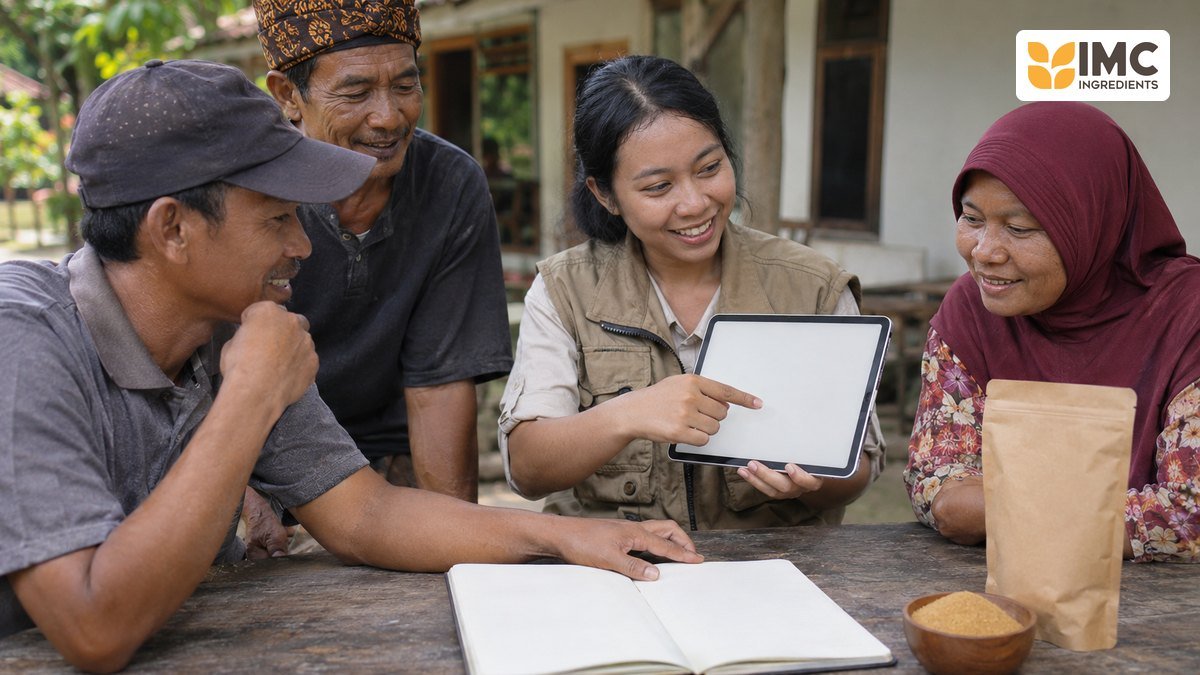
    Using photos in CSR reporting

    CSR photos should match the activity described, such as a training session or tool handover. Add date and location where possible. Do not reuse photos from one programme to illustrate another.

    Withdrawing consent

    People may later ask for their photo to be removed. Have a simple process to do this and update records.

    Storing photo files

    Keep photo files in a secure folder with clear names and consent records linked to them. Limit access to staff who need the images. Delete photos that have no consent record or are no longer needed.

    Working with local partners

    Farmer group leaders and local partners can help explain the purpose of photos and translate where needed. They know local customs, such as which places or moments should not be photographed. Involving them early makes the process smoother and more respectful.

    Where does IMC fit?

    PT Integral Mulia Cipta (IMC Group) has produced coconut sugar in Central Java, Indonesia, since 2012. IMC runs CSR programmes with farmer communities and supplies mesh 14 and mesh 50 coconut sugar, including organic.

    FAQ

    Do I need consent to take village photos? Yes, for identifiable people.

    What about children? Parents or guardians must consent; many avoid using such images.

    Can photos be staged? They should reflect reality and not mislead.

    Can people withdraw consent? Yes, and the photo should then be removed.


    Looking for a reliable coconut sugar partner? Contact PT Integral Mulia Cipta (IMC Group) in Central Java, Indonesia: info@organic-coconut-sugar.com or WhatsApp +62 821 1348 5564.