
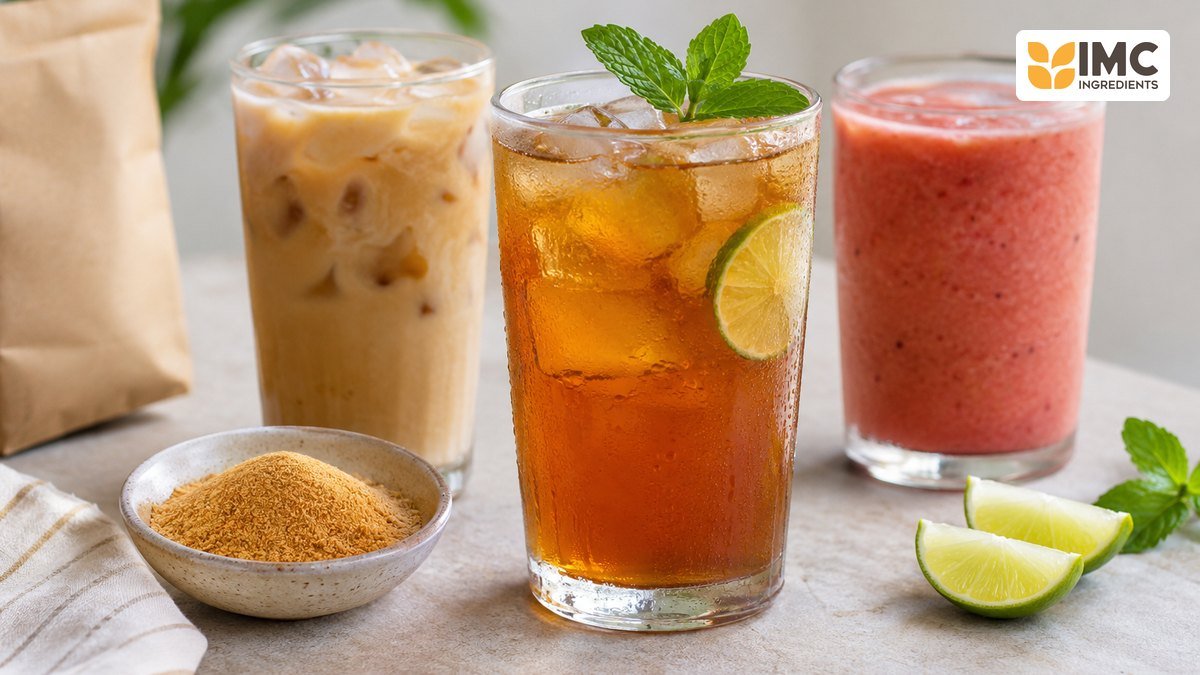
Quick answer: Coconut sugar dissolved in water is usually mildly acidic to near neutral, depending on the lot. Its small amounts of natural minerals and organic acids may slightly affect a drink’s pH and buffering compared with refined sugar. Developers should measure pH in the final formula and adjust acids to reach the target for taste and safety.
Key takeaways – Coconut sugar has a mildly acidic to near-neutral pH in solution. – It may slightly change buffering in drinks. – Always measure pH in the finished formula. – Acid levels affect taste and safety.
Why pH matters in beverages
pH affects taste, colour stability, preservative effectiveness and microbial safety. Many beverages rely on acidity as part of their safety design. Small shifts in pH can change sourness and shelf life.
Coconut sugar in solution
Refined white sugar contains almost only sucrose and has little effect on pH. Coconut sugar contains natural minerals, such as potassium, and small amounts of organic acids from the sap. These can give a slight buffering effect, meaning the drink resists pH change a little more.
Practical effects
| Drink type | What to watch |
|---|---|
| Acidic soft drinks | May need slightly more acid to reach target pH |
| Iced tea | Colour and pH interaction |
| Coffee drinks | Taste balance; pH less critical in some formats |
| Plant milks | Protein stability near neutral pH |
| Kombucha-style drinks | Fermentation affects pH over time |
Steps for developers
- Measure pH of a coconut sugar solution at your target concentration.
- Make the full formula and measure pH again.
- Adjust acid level in small steps.
- Check taste after each adjustment.
- Confirm pH stays stable during shelf life.
Acid choice
Citric, malic and phosphoric acids are common in drinks. Each gives a different sour profile. Coconut sugar’s caramel notes pair well with citric and malic acids in fruit and tea drinks.
Food safety
If your drink relies on low pH for safety, follow regulatory guidance and work with a process authority or food safety expert. Do not assume a formula is safe based on taste.
Lot-to-lot variation
As a natural product, coconut sugar can vary slightly in mineral content. Check pH on new lots during early production runs.
Colour interactions
pH can also influence the colour of drinks containing coconut sugar, tea or fruit extracts. Monitor colour along with pH during development and storage, so the drink looks consistent on the shelf.
Where does IMC fit?
PT Integral Mulia Cipta (IMC Group) has produced coconut sugar in Central Java since 2012. IMC supplies mesh 50 coconut sugar, which dissolves quickly, to beverage developers, with specifications and lot documents.
FAQ
Does coconut sugar change a drink’s pH? Slightly, due to natural minerals and acids.
Do I need more acid? Possibly; measure and adjust.
Is pH important for safety? Yes, in many drinks.
Does pH vary between lots? Slightly; check new lots.
Looking for a reliable coconut sugar partner? Contact PT Integral Mulia Cipta (IMC Group) in Central Java, Indonesia: info@organic-coconut-sugar.com or WhatsApp +62 821 1348 5564.