
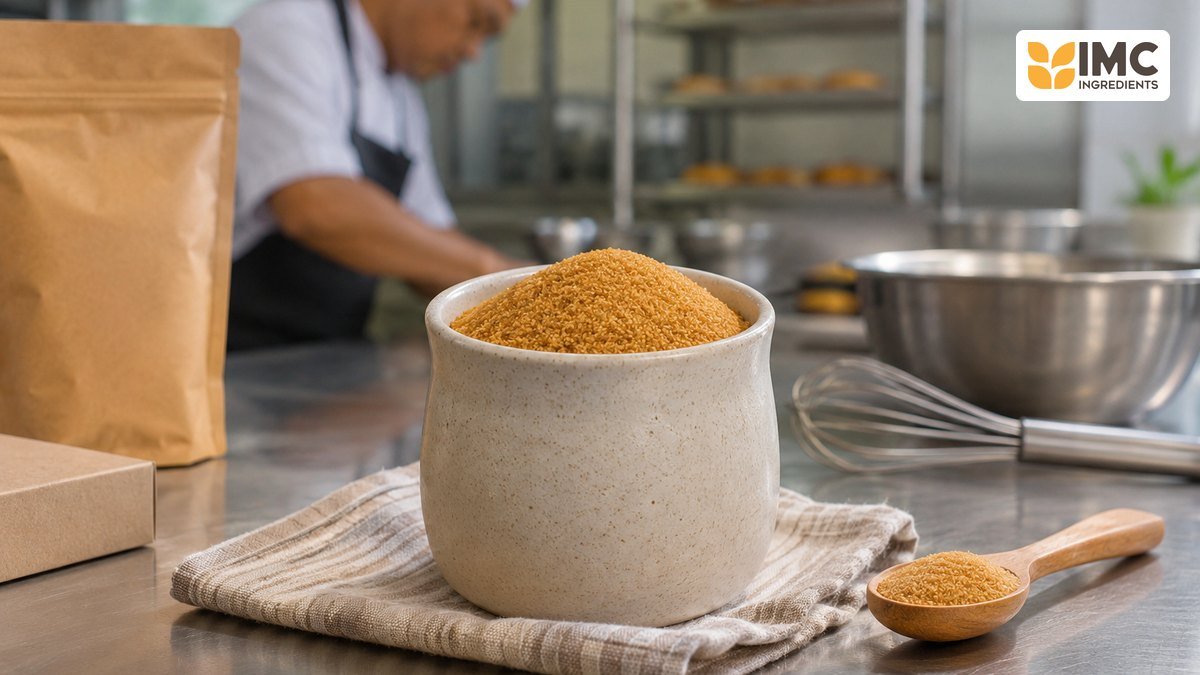
Quick answer: In a restaurant kitchen, coconut sugar works as a 1:1 swap by weight for white or brown sugar in most sauces, dressings, desserts and drinks. It brings caramel colour and flavour, dissolves well in warm liquids and needs airtight storage because it takes up moisture from humid kitchen air. Fine mesh 50 is the easiest grade for daily use.
Key takeaways – Swap 1:1 by weight in most kitchen recipes. – Use fine mesh 50 for sauces and drinks, coarse mesh 14 for toppings. – Store in airtight containers away from steam. – Expect darker colour and caramel notes.
Why chefs use coconut sugar
Many restaurants use coconut sugar because it adds a gentle caramel flavour that white sugar does not have. It fits Southeast Asian dishes naturally, but chefs also use it in desserts, glazes, coffee drinks and dressings. Some menus mention it by name because guests recognise it as a less refined, plant-based sweetener. Any menu wording should stay factual and avoid health promises.
Which grade fits which task
| Kitchen task | Suggested grade | Reason |
|---|---|---|
| Sauces and glazes | Mesh 50 | Dissolves quickly |
| Syrups for drinks | Mesh 50 | Smooth, fast to dissolve |
| Desserts and batters | Mesh 50 | Blends evenly |
| Crumble or brûlée-style tops | Mesh 14 | Visible crunch |
| Rubs for grilling | Mesh 50 or 14 | Depends on texture wanted |
Storage in a busy kitchen
Kitchens are warm and steamy, so coconut sugar can clump if it is left open. Keep it in a sealed, food-grade container with a tight lid. Use a dry scoop every time and store the container away from ovens, dishwashers and stock pots. Decant only what the shift needs and close the main bag straight away. If light clumping happens, the sugar can be broken up by hand or sieved.
Simple swap rules
- Replace white or brown sugar 1:1 by weight.
- Taste the dish, because caramel notes may change the balance.
- For pale sauces, try a partial swap of 25 to 50 percent.
- Watch caramelising glazes closely, as they can colour faster.
- Dissolve the sugar in warm liquid first for dressings.
Where coconut sugar shines on the menu
Coconut sugar works well in dishes where its colour is welcome. Good examples are peanut sauces, satay glazes, braising liquids, caramel sauces, chocolate desserts, sticky rice dishes, iced coffee and spiced syrups. It is less suited to clear jellies or white meringues, where its brown tone shows clearly.
Training the team
Write the swap ratio and storage rule on the recipe card. Show new staff the difference between mesh 14 and mesh 50 so they choose the right bag. Label containers clearly so coconut sugar is not mixed up with brown sugar. A short tasting session helps cooks understand the flavour before they use it in service.
Costing and portion control
Coconut sugar usually costs more than white sugar, so weigh it rather than scooping by eye. Using a scale keeps dishes consistent between shifts and makes recipe costing accurate. A small batch of house syrup made each morning also helps control use behind the bar.
Where does IMC fit?
PT Integral Mulia Cipta (IMC Group) has produced coconut sugar in Central Java, Indonesia, since 2012. IMC supplies mesh 50 and mesh 14 coconut sugar, including organic, to food service distributors and food businesses, packed in paper bags with a food-grade PE liner.
FAQ
Can I use coconut sugar in every recipe? In most recipes yes, but pale or clear dishes will turn darker.
Which grade is best for a kitchen? Mesh 50 for most uses, mesh 14 for crunchy toppings.
How do I stop clumping? Store it sealed, away from steam, and use a dry scoop.
Does it taste different? Yes, it adds caramel and toffee notes.
Looking for a reliable coconut sugar partner? Contact PT Integral Mulia Cipta (IMC Group) in Central Java, Indonesia: info@organic-coconut-sugar.com or WhatsApp +62 821 1348 5564.