
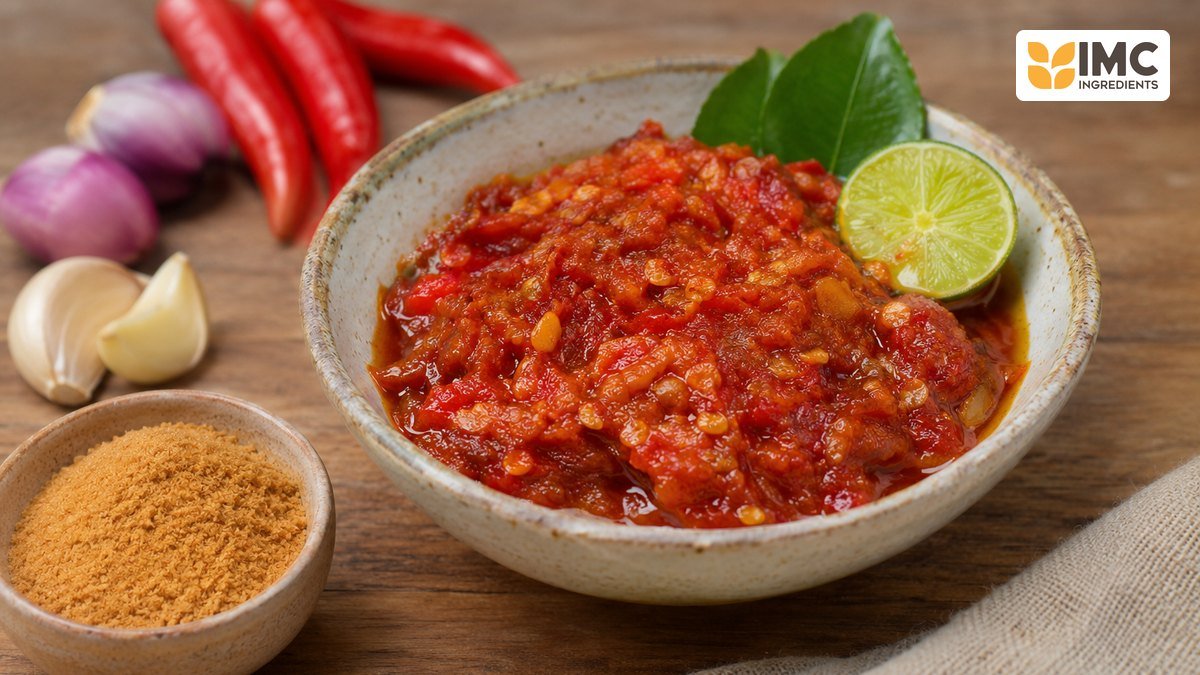
Quick answer: Coconut sugar is a traditional ingredient in many Indonesian sambal recipes. A small amount balances chilli heat, salt and sour notes and deepens the flavour of cooked sambal. Use mesh 50 for fast dissolving, add it early in cooked sambal and check colour and acidity if you produce sambal for retail.
Key takeaways – Coconut sugar balances heat, salt and acidity. – Small amounts make a big difference. – Cooked sambal gains a deeper colour. – Retail sambal needs shelf life validation.
Why sugar belongs in sambal
Sambal is a chilli-based sauce or paste found across Indonesia. Many recipes include coconut sugar to round out the sharp heat of chilli and the saltiness of shrimp paste or salt. The sweetness is usually subtle, but it makes the flavour feel complete.
Common sambal styles
| Style | How coconut sugar is used |
|---|---|
| Raw ground sambal | Ground with chilli, shallot, salt |
| Cooked sambal | Added while frying the paste |
| Sweet-spicy sambal | Higher sugar level, glossy finish |
| Tomato sambal | Balances tomato acidity |
| Sambal for dipping | Dissolved with lime juice |
Raw sambal method
Grind chillies, shallots, garlic and salt. Add a small amount of mesh 50 coconut sugar and lime juice. Taste and adjust. Fine sugar dissolves quickly in the moist paste.
Cooked sambal method
- Grind chillies, shallots and garlic.
- Fry the paste in oil over moderate heat.
- Add coconut sugar and salt.
- Cook until oil separates and colour deepens.
- Add tomato, lime or tamarind as needed.
- Cool and store in clean jars.
Sugar helps the paste caramelise, but stir often to prevent scorching.
For sambal producers
Retail sambal needs consistent heat, sweetness and colour. Weigh ingredients, record lots and measure pH and water activity where relevant. Shelf life and safety depend on the full formula and process, so work with a food technologist to validate them.
Pairing ideas
Sweet-spicy sambal pairs with fried tofu, tempeh, rice dishes and grilled vegetables. Tomato sambal suits fried snacks. A light sambal with lime works as a dip.
Labelling
Name coconut sugar in the ingredient list. If the sambal contains shrimp paste, fish or other allergens, declare them. Count coconut sugar as added sugar where rules require it.
Jar filling and storage
Fill jars while the sambal is hot if your validated process requires it, then close and cool. Leave a thin layer of oil on top to limit air contact. Once opened, store in the refrigerator and use a clean spoon each time.
Where does IMC fit?
PT Integral Mulia Cipta (IMC Group) has produced coconut sugar in Central Java, Indonesia, since 2012. IMC supplies mesh 50 and mesh 14 coconut sugar, including organic, to sauce makers and Indonesian food producers.
FAQ
Why add sugar to sambal? To balance heat, salt and acidity.
How much should I use? Usually a small amount; taste and adjust.
When should I add it in cooked sambal? While frying the paste, stirring often.
Does retail sambal need testing? Yes, validate shelf life and safety.
IMC Group (PT Integral Mulia Cipta) supplies fine-granule organic coconut sugar from Central Java to food companies worldwide. Talk to our team: info@organic-coconut-sugar.com or WhatsApp +62 821 1348 5564.