
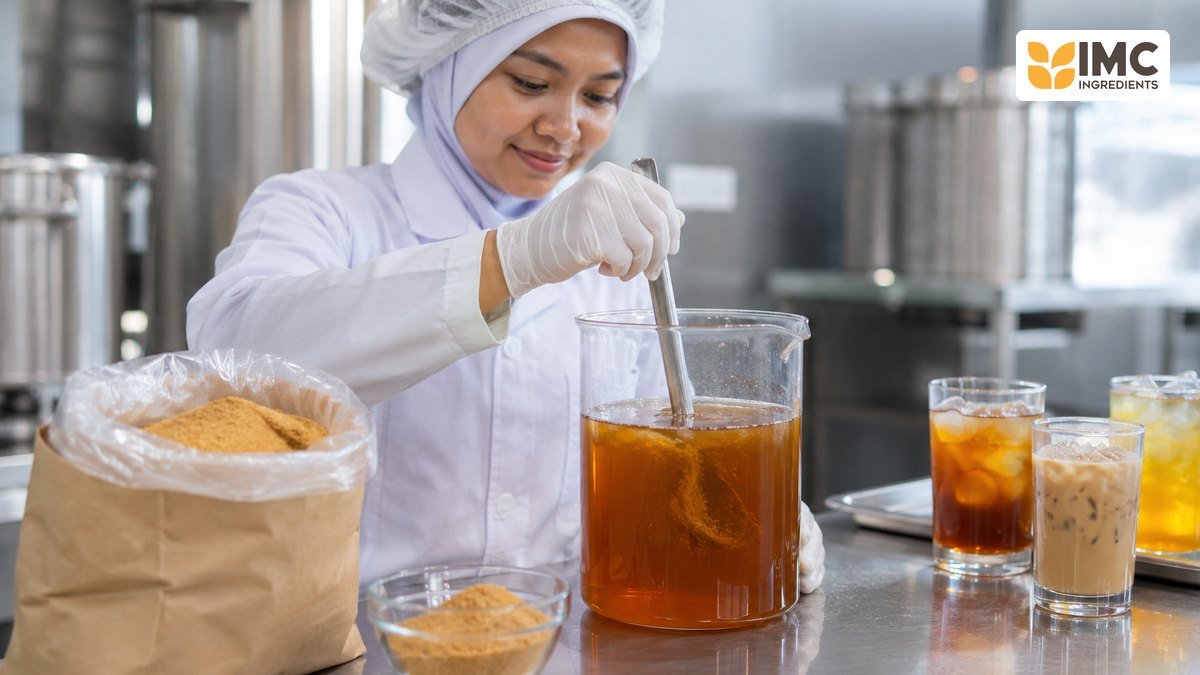
Quick answer: In beverage plants, coconut sugar is usually dissolved in warm water with steady agitation to make a syrup, which is then filtered and blended into the drink. Fine mesh 50 dissolves fastest. Good hygiene, correct temperatures and filtration of small insoluble particles help produce a clean, consistent drink.
Key takeaways – Make a syrup before blending into the final drink. – Warm water and agitation speed up dissolving. – Filter syrup to remove fine particles. – Treat syrup as a sensitive intermediate.
Why make a syrup first?
Dissolving sugar directly into a cold drink base is slow. A concentrated syrup made in warm water dissolves quickly, can be filtered and is easy to dose accurately into the main batch.
Dissolving process
- Fill the tank with treated water.
- Heat to a warm temperature suited to your process.
- Start agitation.
- Add coconut sugar gradually to avoid lumps.
- Mix until fully dissolved.
- Check concentration with a refractometer (Brix).
- Filter through suitable filters.
- Cool or transfer to the blending tank.
Factors that affect dissolving
| Factor | Effect |
|---|---|
| Particle size | Fine mesh 50 dissolves faster |
| Water temperature | Warmer water dissolves faster |
| Agitation | Strong, steady mixing helps |
| Addition rate | Too fast causes clumps |
| Concentration | Very high concentrations slow dissolving |
Filtration
Coconut sugar is a natural product and may contain very small insoluble particles. Filtration helps keep drinks clear and prevents sediment. Choose filter size based on the product and equipment.
Hygiene and microbiology
Sugar syrups can support microbial growth if handled poorly. Use clean tanks, controlled temperatures and short holding times. Many plants pasteurise or heat-treat syrups. Follow your HACCP plan.
Quality checks
- Brix of the syrup.
- Colour.
- Clarity or turbidity.
- Taste and aroma.
- Microbiological checks as required.
Handling bulk bags
Open bags carefully to avoid paper or thread entering the tank. Use a sieve or magnet at the sugar feed point. Record lot numbers for traceability.
Cleaning between batches
Sugar residues on tanks, pipes and filters can attract microbes and affect taste. Include syrup equipment in your cleaning plan and check that residues are fully removed before the next batch.
Planning tank capacity
Coconut sugar syrups take up a large share of tank volume in sweetened drinks. Plan syrup batch sizes to match blending schedules, so syrup does not sit for long periods before use. Shorter holding times support both quality and food safety.
Where does IMC fit?
PT Integral Mulia Cipta (IMC Group) has produced coconut sugar in Central Java since 2012. IMC supplies mesh 50 coconut sugar in paper bags with a food-grade PE liner to beverage producers, with lot numbers for traceability.
FAQ
Why make a syrup first? It dissolves faster and doses accurately.
Which grade dissolves best? Mesh 50.
Should I filter coconut sugar syrup? Yes, to remove fine particles.
How do I check syrup strength? Measure Brix with a refractometer.
PT Integral Mulia Cipta (IMC Group) has produced organic coconut sugar in Central Java, Indonesia, since 2012. For specifications or samples, email info@organic-coconut-sugar.com or WhatsApp +62 821 1348 5564.