
Author: IMC Group

  • Coconut Sugar and Browning Control

    Coconut Sugar and Browning Control

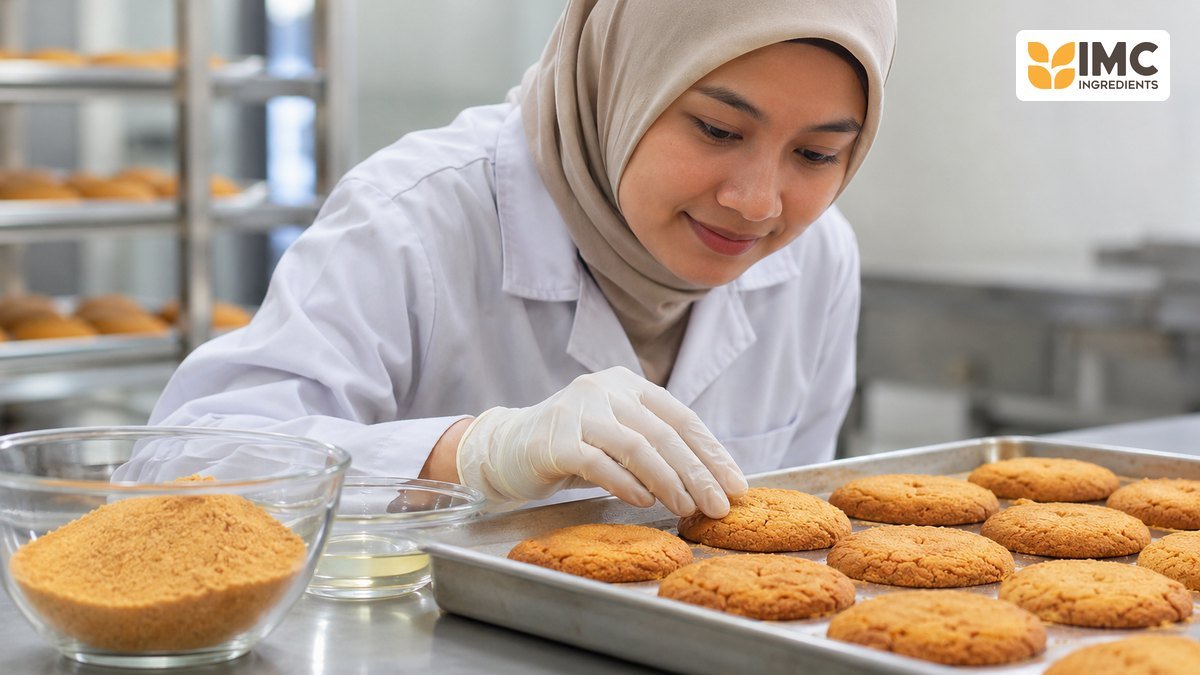
    Quick answer: Coconut sugar products often brown faster than those made with refined white sugar, because coconut sugar starts brown and contains small amounts of reducing sugars that speed up Maillard reactions. Formulators can control browning through baking temperature and time, pH, sugar blends and protein levels.

    Key takeaways – Coconut sugar adds colour before and during baking. – Reducing sugars speed up browning reactions. – Temperature, time and pH are the main levers. – Blending with other sugars can lighten colour.

    Why coconut sugar browns faster

    1. It already has a light to medium brown colour.
    2. It contains small amounts of glucose and fructose, which are reducing sugars.
    3. Reducing sugars react with proteins and amino acids during heating.

    Main browning reactions

    Reaction What happens
    Maillard reaction Sugars react with amino acids, creating colour and flavour
    Caramelisation Sugars break down at high heat

    Both reactions increase with temperature and time.

    Levers for control

    1. Temperature: lower oven or fryer temperatures slow browning.
    2. Time: shorter baking reduces colour.
    3. pH: more acidic conditions slow Maillard browning; alkaline conditions speed it up.
    4. Protein: high milk or egg protein increases browning.
    5. Sugar blend: combining coconut sugar with refined sucrose reduces colour.
    6. Moisture: very dry surfaces brown faster.

    Practical examples

    1. Cookies too dark at the edges: lower temperature, use lighter trays.
    2. Cake tops too dark: lower temperature, cover lightly near the end.
    3. Fried snacks too dark: check frying temperature and coating sugar level.
    4. Cereal coatings too dark: reduce toasting time or temperature.

    Using baking soda carefully

    Baking soda raises pH and can increase browning. If formulas with coconut sugar become too dark, review leavening levels.

    Browning during storage

    Products can continue to darken slowly during storage, especially in warm conditions. Check colour over shelf life and use cooler storage or packaging that limits oxygen and moisture if needed.

    Measuring colour

    Use colour charts, simple image comparison or a colorimeter to measure browning consistently. Record results for each test batch.

    When browning is wanted

    Browning is not always a problem. In biscuits, crackers and bakery coatings, the deeper colour and roasted notes from coconut sugar can be a selling point. The goal is control, not removal, so the product looks the same from batch to batch.

    Where does IMC fit?

    PT Integral Mulia Cipta (IMC Group) has produced coconut sugar in Central Java since 2012. IMC supplies mesh 50 and mesh 14 coconut sugar with specifications that help formulators plan colour in finished products.

    FAQ

    Why do coconut sugar products brown faster? Because of natural colour and reducing sugars.

    How can I reduce browning? Lower temperature, shorten time, lower pH or blend sugars.

    Does baking soda affect browning? Yes. It raises pH and increases browning.

    Can products darken in storage? Yes, slowly; test over shelf life.


    IMC Group (PT Integral Mulia Cipta) supplies fine-granule organic coconut sugar from Central Java to food companies worldwide. Talk to our team: info@organic-coconut-sugar.com or WhatsApp +62 821 1348 5564.
  • Coconut Farming in Indonesia: The Big Picture

    Coconut Farming in Indonesia: The Big Picture

    Quick answer: Indonesia is one of the world’s largest coconut-producing countries, and most coconut farming is done by smallholders on small plots. Coconut sugar comes from sap tapped from the flower stalks, cooked in small household units. This work supports many rural families, but it also faces challenges such as ageing trees, safety risks and price changes.

    Key takeaways – Most coconut farming in Indonesia is smallholder-based. – Coconut sugar is a household-scale craft linked to sap tapping. – Safety, tree age and income stability are key challenges. – Buyers can support communities through fair, long-term sourcing.

    Smallholders at the centre

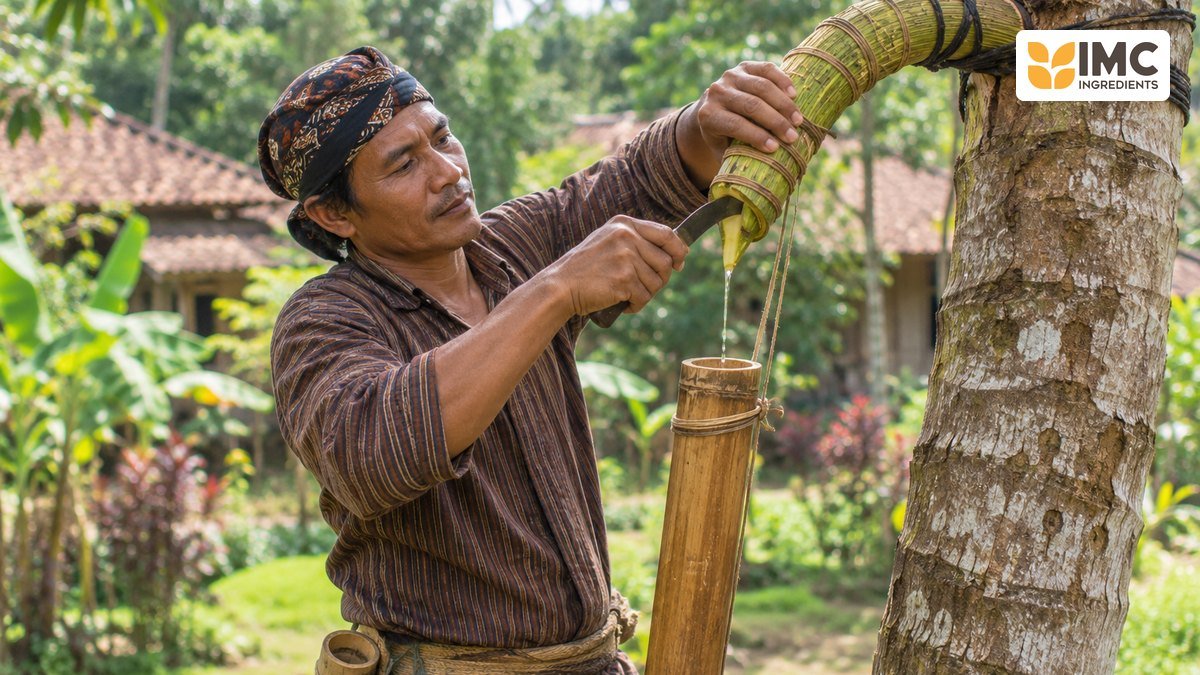
    Coconut farmers in Indonesia often manage only a small number of trees alongside other crops. Families combine coconut products with rice, vegetables and other work. Coconut sugar provides a regular income because sap can be collected every day.

    How coconut sugar fits

    Step Who does it
    Sap tapping Tappers climb trees twice a day
    Cooking Usually family members at home
    Crystallising Stirring the thick syrup as it cools
    Collection Farmer groups or collectors
    Processing and export Factories such as IMC

    Main regions

    Coconut sugar is produced in several provinces. Central Java, including Banyumas, Purbalingga, Cilacap and Kebumen, is a well-known area for coconut sugar making.

    Challenges

    1. Climbing tall trees is risky work.
    2. Many trees are old and less productive.
    3. Cooking uses firewood and household time.
    4. Prices can change, affecting income.
    5. Younger people may choose other jobs.

    Responses in the sector

    Programmes focus on safety equipment, training, better cooking tools, organic certification and planting dwarf coconut varieties, which are easier and safer to tap. IMC’s CSR work includes a tool renewal programme with PUR Projet in 2023 and a GIZ develoPPP partnership since 2025 that covers training, safer work, organic certification and dwarf coconut.

    What buyers can do

    Buyers can support communities by building long-term relationships, paying on time, sharing forecasts and supporting suppliers’ CSR programmes. Clear, steady demand helps suppliers plan and invest.

    Seasonal patterns

    Sap flow can change with rainfall and season. During some months, production may be lower. Suppliers and buyers who plan together can manage these changes without sudden shortages.

    Why this matters to food brands

    Brands that use coconut sugar increasingly want to know where it comes from and who produces it. Understanding the smallholder structure helps them ask suppliers the right questions and tell an honest story to their own customers.

    Where does IMC fit?

    PT Integral Mulia Cipta (IMC Group) has produced coconut sugar in Central Java, Indonesia, since 2012. IMC works with farmer communities and supplies mesh 14 and mesh 50 coconut sugar, including organic.

    FAQ

    Who produces coconut sugar in Indonesia? Mostly smallholder families.

    Why is tapping risky? Tappers climb tall trees daily.

    What are dwarf coconut varieties? Shorter trees that are easier and safer to tap.

    How can buyers help? Through long-term, fair and reliable sourcing.


    Questions about coconut sugar for your products? PT Integral Mulia Cipta (IMC Group), a Central Java producer since 2012, is happy to help. Email info@organic-coconut-sugar.com or WhatsApp +62 821 1348 5564.