

Author: IMC Group

  • Transport Emissions and Sea Freight

    Transport Emissions and Sea Freight

    Quick answer: Transporting food ingredients creates greenhouse gas emissions. Sea freight in containers is generally one of the lowest-emission ways to move goods long distances per tonne-kilometre, compared with air freight. Buyers and suppliers can reduce transport emissions by using full containers, efficient routes, good planning and fewer urgent shipments by air.

    Key takeaways – Emissions depend on mode, distance and load. – Sea freight is usually far lower per tonne-km than air freight. – Full containers and good planning reduce emissions per tonne. – Inland transport also matters.

    How transport emissions are estimated

    Emissions are often estimated using distance, weight and an emission factor for each transport mode. Results are expressed in kilograms of CO2-equivalent per tonne-kilometre. Methods such as the GLEC Framework help standardise these estimates. Values vary by vessel type, route and data source.

    Comparing modes

    Mode Relative emissions per tonne-km
    Air freight Very high
    Road truck Medium to high
    Rail Low to medium
    Sea freight (container ship) Low

    These are general comparisons; actual numbers depend on many factors.

    Why sea freight is efficient

    Large container ships carry thousands of containers at once, spreading fuel use over a large cargo. For dry, stable ingredients like coconut sugar, sea freight is the normal mode.

    Practical ways to reduce impact

    • Fill containers fully and efficiently.
    • Plan orders to avoid urgent air shipments.
    • Choose efficient routes and carriers.
    • Use rail for inland legs where available.
    • Combine shipments where possible.

    Inland transport

    Trucking from factory to port and from port to warehouse can contribute significantly, especially over long distances. Efficient loading and route planning help.

    Data requests from buyers

    Some buyers ask suppliers for transport emission estimates as part of their climate reporting. Suppliers can share shipment details such as weight, distance, mode and container type, and use recognised calculation methods.

    Claims

    Avoid claims such as “carbon neutral shipping” unless supported by robust, verified methods. Describe actual measures instead.

    Packaging and load efficiency

    Packaging affects how much product fits in each container. Strong bags that stack well and pallet patterns that use space efficiently increase payload. Removing unnecessary packaging layers reduces weight. These steps lower emissions per tonne of product and can also reduce freight cost, giving both environmental and business benefits.

    Sharing data with buyers

    When buyers request transport data, suppliers can provide a simple table for each shipment: origin, port of loading, port of discharge, container type, net weight and transport mode for each leg. Buyers can then apply their chosen calculation method. Keeping this data organised makes it easy to respond to climate reporting requests.

    Where does IMC fit?

    PT Integral Mulia Cipta (IMC Group) has produced coconut sugar in Central Java, Indonesia, since 2012. IMC ships organic and conventional coconut sugar in mesh 14 and mesh 50 to buyers abroad by sea freight.

    FAQ

    Is sea freight low-emission? It is generally much lower per tonne-km than air freight.

    How are emissions calculated? Using distance, weight and mode-specific factors.

    How can emissions be reduced? Full containers, good planning and efficient routes.

    Can shipping be called carbon neutral? Only with robust, verified methods.


    Questions about coconut sugar for your products? PT Integral Mulia Cipta (IMC Group), a Central Java producer since 2012, is happy to help. Email info@organic-coconut-sugar.com or WhatsApp +62 821 1348 5564.
  • What Happens to Water When Sap Becomes Sugar?

    What Happens to Water When Sap Becomes Sugar?

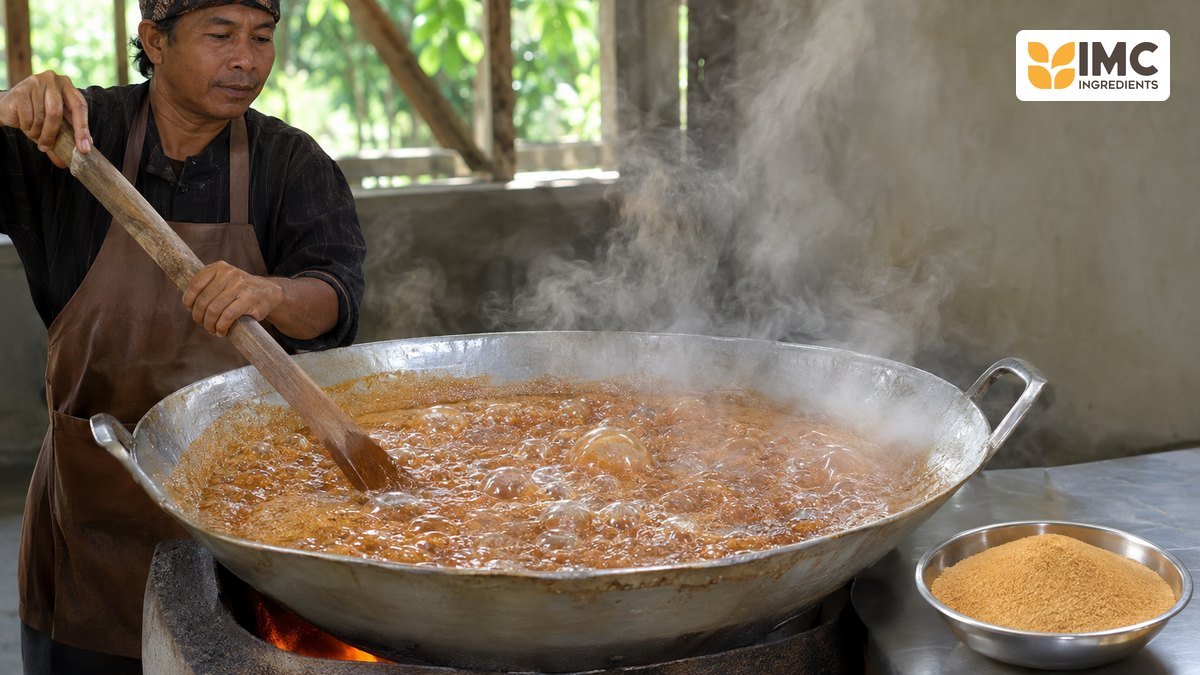
    Quick answer: Fresh coconut sap is mostly water with dissolved sugars. During cooking, most of that water evaporates as steam, concentrating the sugars until a thick syrup forms. Stirring as it cools turns the syrup into granules with only a small amount of moisture left. Controlling how much water remains is key to free-flowing, stable sugar.

    Key takeaways – Sap is mostly water; sugar is mostly dry solids. – Cooking evaporates most of the water. – The boiling point rises as sugar concentrates. – Final moisture affects flow, clumping and shelf life.

    Starting point: sap

    Fresh coconut sap is a clear, sweet liquid. Most of it is water, with sugars, mainly sucrose, and small amounts of other components dissolved in it. Many litres of sap are needed to make one kilogram of sugar, because so much water must be removed.

    Evaporation during cooking

    Stage Water status Appearance
    Fresh sap Mostly water Clear, thin
    Early boiling Water evaporating Foaming, light colour
    Mid cooking Concentration rising Golden, thicker
    Late cooking Little water left Thick, amber syrup
    Granulation Very little water Granules form

    Boiling point rise

    Pure water boils at around 100 degrees Celsius at sea level. As sugar concentration increases, the boiling point rises. Producers use this, along with visual signs, to judge when syrup is ready. A thermometer can help make this more consistent.

    Why stop at the right point

    If cooking stops too early, too much water remains. The syrup may not granulate well, and granules may be sticky and clump. If cooking goes too far, the sugar can darken excessively or burn. The right end point balances moisture, colour and flavour.

    Moisture in granules

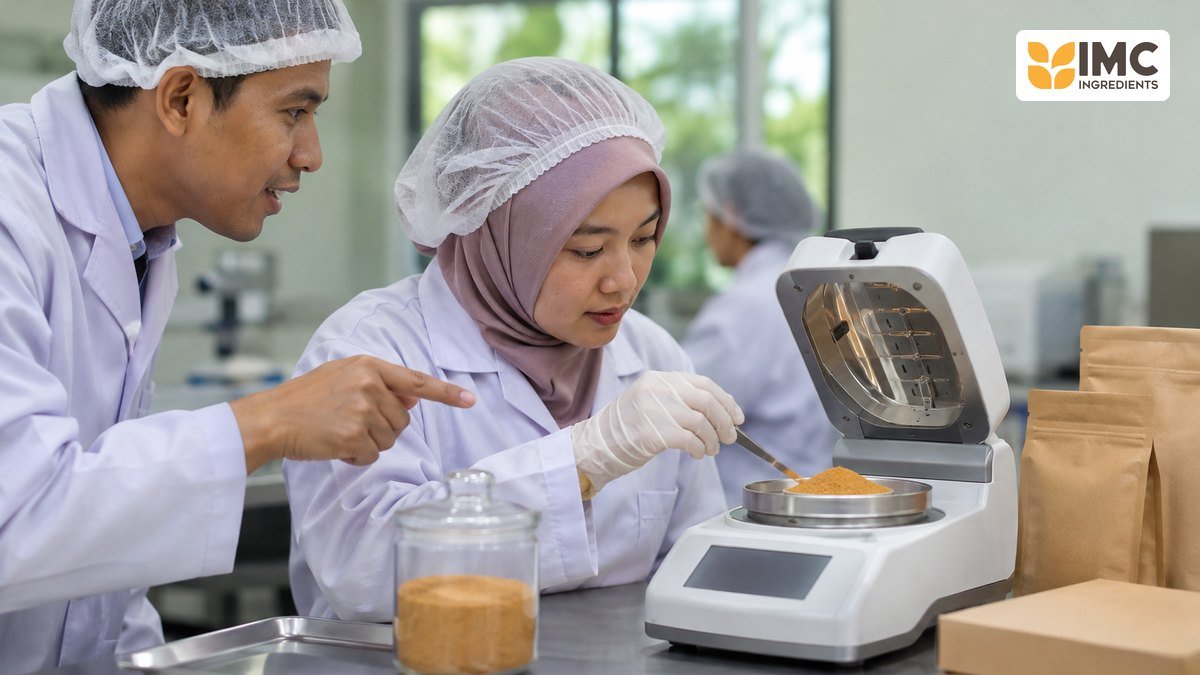
    After granulation, a small amount of moisture remains. Further drying may be used to reach a target. Specifications usually set a maximum moisture, because higher moisture increases clumping and can affect shelf life.

    After packing

    Sugar is hygroscopic and can absorb water from humid air. Moisture-protective packaging, like paper bags with a food-grade PE liner, and dry storage help keep moisture low.

    Energy use

    Evaporating so much water needs a lot of heat. Efficient stoves and pans can reduce fuel use, saving costs for farmers and reducing smoke.

    Water in the rainy season

    In the rainy season, rainwater can enter sap containers if they are not covered. This dilutes the sap, so more water must be boiled away, using more fuel and time. Covering containers and checking them after rain helps. Humid air also slows drying of finished sugar, making careful storage even more important during wet months.

    Where does IMC fit?

    PT Integral Mulia Cipta (IMC Group) has produced coconut sugar in Central Java, Indonesia, since 2012. IMC supplies organic and conventional coconut sugar in mesh 14 and mesh 50, packed in paper bags with a food-grade PE liner.

    FAQ

    Is coconut sap mostly water? Yes, with dissolved sugars.

    Why does the boiling point rise? Because sugar concentration increases.

    What happens if cooking stops too early? Sugar may be sticky and clump.

    How is moisture kept low after packing? With moisture-protective packaging and dry storage.


    IMC Group (PT Integral Mulia Cipta) supplies fine-granule organic coconut sugar from Central Java to food companies worldwide. Talk to our team: info@organic-coconut-sugar.com or WhatsApp +62 821 1348 5564.

  • Training QC Staff

    Training QC Staff

    Quick answer: Quality control staff need skills in sampling, testing, recording, calibration and decision-making. Good training combines clear procedures, demonstrations, supervised practice and regular competence checks. Well-trained QC staff produce reliable results that buyers can trust and help the factory catch problems early.

    Key takeaways – QC skills cover sampling, testing, records and decisions. – Training should be practical and supervised. – Competence checks confirm skills. – Refresher training keeps standards high.

    Why QC training matters

    Test results are only as reliable as the person producing them. A wrong sampling method or a mistake in a calculation can lead to wrong decisions: releasing a lot that should be held, or rejecting good product. Buyers rely on certificates of analysis, so QC accuracy is central to trust.

    Core skills

    Skill What staff learn
    Sampling Taking representative samples, labelling
    Testing Moisture, particle size, colour, others
    Equipment use Correct operation and care
    Calibration Checking balances and instruments
    Records Accurate, legible, complete data
    Decisions Comparing results with specifications
    Escalation When and how to report issues

    Training steps

    1. Read and discuss the procedure.
    2. Watch an experienced analyst perform the test.
    3. Perform the test under supervision.
    4. Compare results with the trainer’s results.
    5. Sign off when results are consistent.

    Competence checks

    Competence can be checked by testing known samples, repeating tests on the same sample and comparing results between analysts. Records of these checks show auditors that staff are qualified.

    Calibration and maintenance

    QC staff should know how to check balances with reference weights, verify ovens and moisture analysers, and keep calibration records. Equipment out of calibration must not be used until fixed.

    Good documentation

    • Record results immediately.
    • Use permanent ink or secure electronic systems.
    • Correct errors with a single line, initials and date.
    • Never overwrite or remove data.

    Refreshers and new methods

    Refresher training helps maintain standards, especially when procedures change or new equipment arrives. Results from proficiency tests or customer comparisons can show where retraining is needed.

    Building confidence

    QC staff sometimes need to hold product or report problems to production managers. Training should include how to communicate findings clearly and confidently, with management support.

    Training plan for a new analyst

    A simple training plan for a new QC analyst can run over several weeks. The first week covers hygiene, safety and sampling. The second week focuses on the main tests, such as moisture and particle size, under supervision. The third week adds records, calibration and specification checks. By the end, the analyst performs tests alone, with results compared against an experienced colleague.

    Where does IMC fit?

    PT Integral Mulia Cipta (IMC Group) has produced coconut sugar in Central Java, Indonesia, since 2012. IMC supplies organic and conventional coconut sugar in mesh 14 and mesh 50. Since 2025, its GIZ develoPPP partnership has supported training.

    FAQ

    What skills do QC staff need? Sampling, testing, equipment use, records and decisions.

    How is competence checked? With known samples and repeat tests.

    Why is calibration important? Uncalibrated equipment gives unreliable results.

    How should errors in records be corrected? A single line, initials and date.


    Questions about coconut sugar for your products? PT Integral Mulia Cipta (IMC Group), a Central Java producer since 2012, is happy to help. Email info@organic-coconut-sugar.com or WhatsApp +62 821 1348 5564.
  • Coconut Sugar in Black Sesame Desserts

    Coconut Sugar in Black Sesame Desserts

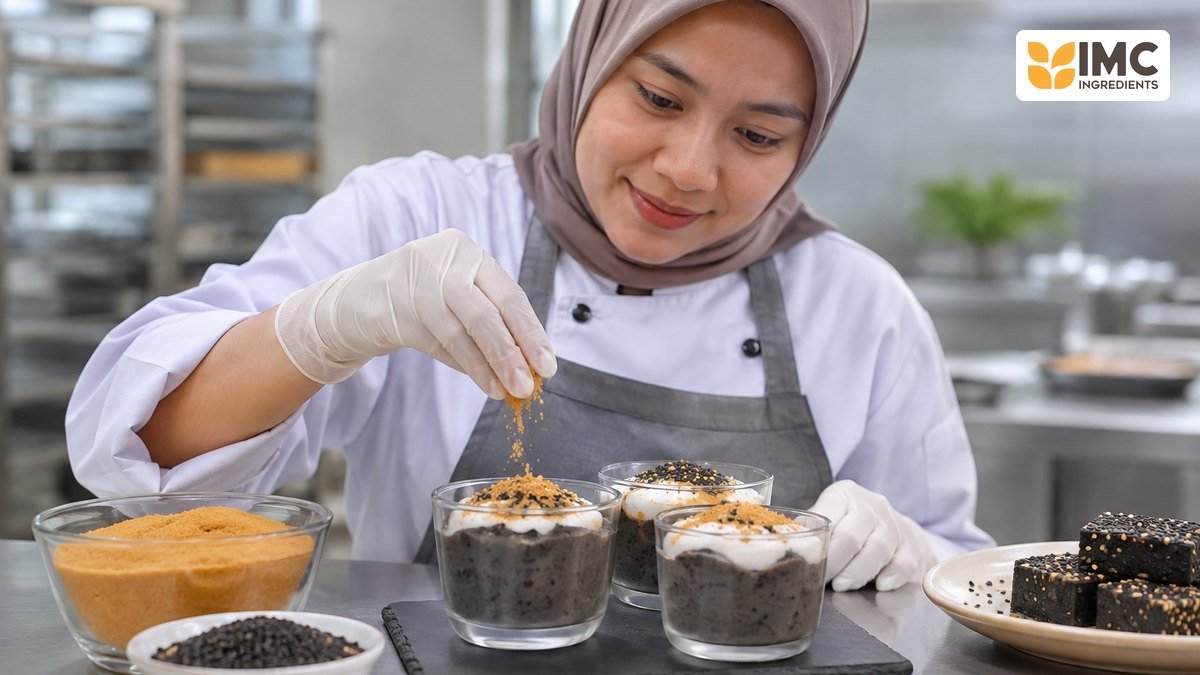
    Quick answer: Black sesame has a deep, nutty and slightly bitter flavour. Coconut sugar balances this with caramel sweetness and rounds out the roasted notes. It works in black sesame paste, sweet soups, ice cream, mochi and rice ball fillings and baked goods. Toast sesame carefully and dissolve or grind the sugar finely for a smooth texture.

    Key takeaways – Caramel sweetness balances sesame bitterness. – Use fine coconut sugar for smooth pastes. – Toast sesame gently to avoid burnt flavours. – Black sesame desserts are popular across East Asia.

    The flavour pairing

    Black sesame seeds, when toasted, give an intense nutty aroma with some bitterness. White sugar provides sweetness but little extra flavour. Coconut sugar adds toffee and caramel notes that make the dessert feel richer. The darker colour of coconut sugar also suits the deep grey-black of sesame desserts.

    Dessert ideas

    Dessert How coconut sugar is used
    Black sesame paste Ground with toasted seeds
    Sweet sesame soup Dissolved in the cooking liquid
    Glutinous rice ball filling Mixed with sesame and fat
    Ice cream Dissolved in the custard base
    Mochi In filling or dusting
    Cookies and cakes Creamed or mixed into batter

    Making a smooth paste

    Toast black sesame seeds in a dry pan over low heat until fragrant. Cool, then grind with fine coconut sugar. Sugar helps the grinding process and absorbs released oil. Add a little neutral oil or melted butter if a softer paste is wanted. Fine sugar avoids a gritty texture.

    Sweet sesame soup

    For a traditional-style sweet soup, blend toasted sesame with water and a little rice flour, then cook while stirring. Add coconut sugar to taste and stir until dissolved. The soup should be smooth and slightly thick.

    Rice ball fillings

    A classic filling mixes ground sesame, sugar and fat, then chills it to firm up. Coconut sugar gives a deeper flavour. Chill well before shaping so the filling holds.

    Ice cream

    Dissolve coconut sugar in warm milk or custard base, then add ground sesame. Chill and churn. Sugar affects freezing point and softness, so keep the total sugar level similar to a tested recipe.

    Tips for producers

    • Control roasting time and temperature for consistent flavour.
    • Store toasted sesame in airtight packaging to avoid rancidity.
    • Use fine coconut sugar for pastes and fillings.
    • Test shelf life for pastes, which contain oil and sugar.

    Presentation ideas

    Black sesame desserts look striking when served with contrasting colours. A drizzle of coconut sugar syrup over grey sesame ice cream adds shine and a warm brown accent. White glutinous rice balls filled with dark sesame paste show a clear contrast when cut open. A sprinkle of toasted white sesame and a few flakes of salt on top of a sesame pudding adds texture and makes the dessert look more finished.

    Where does IMC fit?

    PT Integral Mulia Cipta (IMC Group) has produced coconut sugar in Central Java, Indonesia, since 2012. IMC supplies organic and conventional coconut sugar in mesh 14 and mesh 50 to dessert and food producers.

    FAQ

    Why pair coconut sugar with black sesame? Its caramel notes balance sesame bitterness.

    How do I avoid gritty paste? Use fine coconut sugar and grind well.

    Can I use it in sesame ice cream? Yes, dissolved in the base.

    How should toasted sesame be stored? In airtight packaging to prevent rancidity.


    Questions about coconut sugar for your products? PT Integral Mulia Cipta (IMC Group), a Central Java producer since 2012, is happy to help. Email info@organic-coconut-sugar.com or WhatsApp +62 821 1348 5564.

  • Blending Coconut Sugar With Other Sweeteners

    Blending Coconut Sugar With Other Sweeteners

    Quick answer: Food developers often blend coconut sugar with other sweeteners to balance flavour, colour, cost and function. Common partners include cane sugar, honey, maple syrup, fruit concentrates and rice syrup. Blending lets a product keep coconut sugar’s caramel notes while adjusting sweetness, texture and colour. Each blend should be tested and labelled correctly.

    Key takeaways – Blends balance flavour, colour, cost and function. – Start with small changes and taste-test. – Different sweeteners bring different moisture and browning. – List every sweetener on the label as required.

    Why blend?

    Using one sweetener does not always give the best result. Coconut sugar adds flavour and colour, but a product may need a lighter colour, a different texture or a set cost. A blend gives more control. It also lets brands mention coconut sugar while keeping familiar taste.

    Common pairings

    Partner Reason to blend Watch out for
    Cane sugar Lighter colour, neutral sweetness Less caramel flavour
    Honey Floral notes, moisture Faster browning, liquid
    Maple syrup Complementary caramel Cost, liquid
    Rice syrup Binding in bars Lower sweetness
    Fruit concentrates Fruity notes Acidity, colour

    Balancing sweetness

    Sweeteners differ in sweetness and taste profile. Coconut sugar, being mainly sucrose, has sweetness similar to cane sugar. Syrups add water, which may need adjusting elsewhere. Run small trials with different ratios, such as 25, 50 and 75 percent coconut sugar, and use a taste panel to compare.

    Function in the product

    • Browning: coconut sugar and honey brown faster.
    • Moisture: syrups add water and soften texture.
    • Binding: syrups help in bars and clusters.
    • Crystallisation: blends may change how sugars set.
    • Flavour: each sweetener changes the profile.

    Process considerations

    Dry blends are easy to mix in powder products. Liquid sweeteners may need heating or a different mixing step. Particle size matters for dry blends; fine coconut sugar mixes more evenly with other fine ingredients.

    Labelling

    Each sweetener must appear in the ingredient list in order of weight, following local rules. Front-of-pack wording should be accurate. If a product is called “sweetened with coconut sugar” but contains other sugars, check local rules on such statements.

    Testing

    Test blends for taste, texture and shelf life. Check that colour and flavour stay stable over time. Record the ratio and process for consistent production.

    Cost and supply

    Blending can help manage cost and secure supply by not relying on one sweetener. Agree specifications for each sweetener with suppliers.

    Example trial plan

    A simple trial plan can compare four versions of the same product: 100 percent cane sugar, 75 percent cane with 25 percent coconut sugar, a 50-50 blend and 100 percent coconut sugar. Keep all other ingredients and process steps the same. Measure colour, taste, texture and any process differences, such as mixing time or browning. Scoring each version on a simple scale shows which blend best fits the product goals.

    Where does IMC fit?

    PT Integral Mulia Cipta (IMC Group) has produced coconut sugar in Central Java, Indonesia, since 2012. IMC supplies organic and conventional coconut sugar in mesh 14 and mesh 50; the fine mesh 50 grade blends evenly with other dry ingredients.

    FAQ

    Why blend coconut sugar with other sweeteners? To balance flavour, colour, cost and function.

    Which sweeteners pair well? Cane sugar, honey, maple syrup, rice syrup and fruit concentrates.

    Does blending affect labelling? Yes, every sweetener must be listed.

    How should blends be tested? For taste, texture and shelf life.


    Looking for a reliable coconut sugar partner? Contact PT Integral Mulia Cipta (IMC Group) in Central Java, Indonesia: info@organic-coconut-sugar.com or WhatsApp +62 821 1348 5564.
  • Why Coconut Sugar Varies From Batch to Batch

    Why Coconut Sugar Varies From Batch to Batch

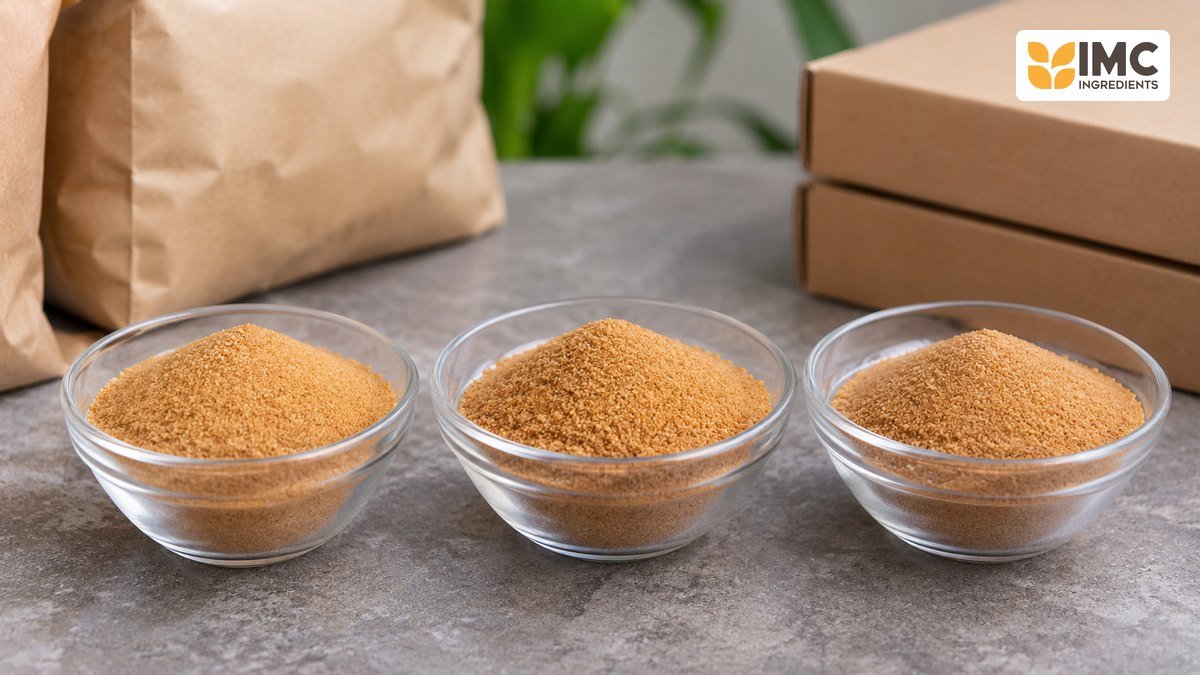
    Quick answer: Coconut sugar is a minimally processed natural product, so colour, moisture and flavour can vary a little from batch to batch. Differences come from the sap, the season, cooking time, drying and sieving. Clear specifications, sampling and lot testing keep these differences within agreed limits for food manufacturers.

    Key takeaways – Small natural variation is normal. – Sap, season and cooking affect colour and flavour. – Drying and sieving affect moisture and particle size. – Specifications and testing keep batches within range.

    Why a natural product varies

    Coconut sugar is made by collecting sap from coconut blossoms, cooking it until it thickens, then crystallising and drying it. It is not refined like white sugar, which is purified until almost only sucrose remains. Because coconut sugar keeps more of the natural compounds from the sap, small differences in the raw material show in the final product.

    Main sources of variation

    Factor What it can change
    Sap freshness Colour and flavour
    Season and weather Sap composition
    Cooking time and heat Colour depth, caramel notes
    Drying Moisture content, flowability
    Sieving Particle size distribution
    Storage Clumping, colour over time

    Colour differences

    Colour is the variation buyers notice first. Longer cooking or higher heat gives a darker product. In finished foods with strong colours, such as chocolate or spiced baked goods, small colour differences hardly matter. In pale products, a buyer may want a tighter colour range.

    Moisture and flow

    Moisture affects how freely the sugar flows and how well it stores. Good drying and sealed packaging help keep moisture low. Lots that are slightly higher in moisture may clump more easily in humid conditions.

    How suppliers control variation

    1. Agreed specifications for moisture, colour, particle size and microbiology.
    2. Standard cooking and drying steps.
    3. Sieving to the agreed mesh size.
    4. Sampling and testing each lot.
    5. Lot coding so every bag can be traced.
    6. Retained samples for later comparison.

    What buyers can do

    Share the parameters that matter most for your product. Approve a reference sample and compare new lots against it. Check the lot documents on arrival. For colour-sensitive products, test a small trial batch with each new lot before full production.

    Blending to reduce differences

    Some factories blend production lots before packing to even out small differences. Buyers who use large volumes can also rotate stock so that one lot is used fully before the next starts. This makes any change easier to notice and manage on the production line.

    Talking about variation with customers

    If you sell a finished product, a small colour difference between production runs is normal for a natural ingredient. Many brands explain this simply on their website or in customer service replies. Honest, factual wording helps customers understand without making claims the product cannot support.

    Where does IMC fit?

    PT Integral Mulia Cipta (IMC Group) has produced coconut sugar in Central Java, Indonesia, since 2012. IMC supplies mesh 14 and mesh 50 coconut sugar, including organic, with lot coding and documents so food manufacturers can manage batch-to-batch consistency.

    FAQ

    Is batch variation a quality problem? Not when it stays within the agreed specification.

    What varies most? Usually colour and moisture.

    How can I manage colour in pale products? Agree a colour range and test each new lot.

    Can I keep a reference sample? Yes, a reference sample is a useful comparison tool.


    IMC Group (PT Integral Mulia Cipta) supplies fine-granule organic coconut sugar from Central Java to food companies worldwide. Talk to our team: info@organic-coconut-sugar.com or WhatsApp +62 821 1348 5564.
  • What Makes a Sugar Free-Flowing?

    What Makes a Sugar Free-Flowing?

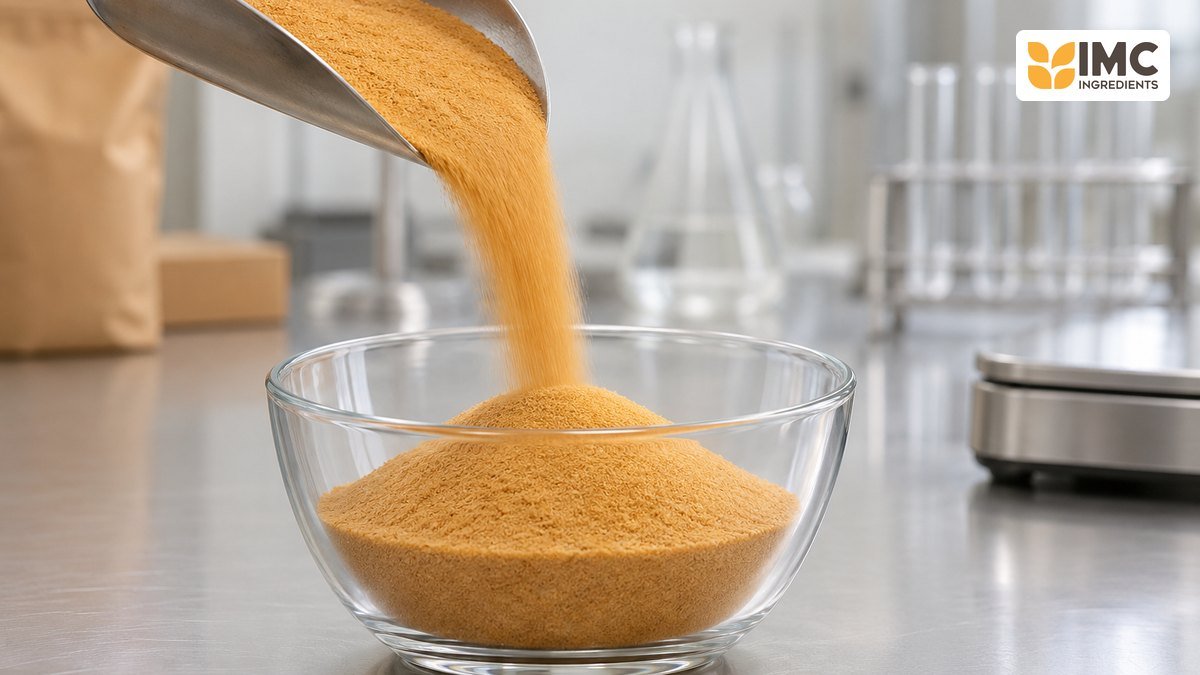
    Quick answer: A sugar flows freely when its granules are dry, fairly even in size and not stuck together. Low moisture, controlled humidity, sealed packaging and good storage keep coconut sugar free-flowing. When moisture rises, granule surfaces become sticky and form bridges, which leads to lumps and blocked hoppers.

    Key takeaways – Dry, even granules flow best. – Humidity is the main enemy of flow. – Sealed packaging and dry storage protect flow. – Simple tests can spot problems early.

    Why flow matters in production

    Automatic dosing systems, hoppers and screw feeders need ingredients that flow steadily. If sugar clumps, dosing becomes inaccurate, lines stop and staff must break lumps by hand. For dry mixes and coated products, poor flow also leads to uneven distribution.

    Factors that affect flow

    Factor Effect on flow
    Moisture content Higher moisture means stickier granules
    Air humidity Moist air is absorbed by the sugar
    Particle size Very fine powders can pack and bridge
    Temperature changes Can cause moisture to move and form cakes
    Storage pressure Heavy stacks compress bottom bags
    Time Long storage raises caking risk

    Why coconut sugar needs care

    Coconut sugar takes up moisture more easily than refined white sugar, because it contains small amounts of other sugars and natural compounds. It flows well when dry and well packed, but needs more attention to storage conditions.

    How to keep sugar flowing

    1. Store bags sealed until use.
    2. Keep the warehouse dry and well ventilated.
    3. Avoid big temperature swings.
    4. Do not stack too high.
    5. Use first in, first out stock rotation.
    6. Reseal opened bags tightly.
    7. Keep hoppers covered.

    Flow aids

    Some products use flow agents such as starch or silica, where local rules allow. These are added in the customer’s process, not usually to plain coconut sugar. Any addition must be declared on the label.

    Simple flow tests

    • Pour test: pour a set amount through a funnel and time it.
    • Squeeze test: squeeze a handful; free-flowing sugar falls apart.
    • Hopper check: watch for bridging or rat-holing during use.
    • Moisture test: check moisture on arrival and before use.

    Breaking up mild lumps

    If a bag shows light clumping, sieve it before use. Do not add water or heat it in the bag. Find the cause, such as a damaged liner or damp storage, so the problem does not return.

    Line design that helps flow

    Hopper shape also matters. Steep walls and smooth stainless surfaces help sugar slide rather than stick. Short transfer distances and covered conveyors reduce contact with humid air. Talk to equipment makers about designs that suit slightly sticky ingredients.

    Where does IMC fit?

    PT Integral Mulia Cipta (IMC Group) has produced coconut sugar in Central Java, Indonesia, since 2012. IMC dries and sieves mesh 14 and mesh 50 coconut sugar, including organic, and packs it in paper bags with a food-grade PE liner to protect flow.

    FAQ

    Why does coconut sugar clump? It absorbs moisture from humid air.

    How can I keep it flowing? Store sealed, dry and with stock rotation.

    Can I add a flow agent? Yes, where your local rules allow, and declare it.

    What should I do with lumps? Sieve the sugar and fix the storage cause.


    PT Integral Mulia Cipta (IMC Group) has produced organic coconut sugar in Central Java, Indonesia, since 2012. For specifications or samples, email info@organic-coconut-sugar.com or WhatsApp +62 821 1348 5564.

  • What Gives Coconut Sugar Its Crunch?

    What Gives Coconut Sugar Its Crunch?

    Quick answer: Coconut sugar crunches because its granules are solid crystals made mainly of sucrose. Larger granules, such as mesh 14, give a stronger crunch. Low moisture keeps the crystals hard. When the sugar takes up water from the air or from a moist food, the surface softens and the crunch fades.

    Key takeaways – Crunch comes from dry sucrose crystals. – Mesh 14 gives more crunch than mesh 50. – Moisture softens crystals. – Timing and packaging protect crunch in products.

    The science of crunch

    Sugar crystals are hard and brittle. When you bite them, they break with a small snap. Coconut sugar is made by cooking sap until it thickens, then stirring it as it cools so crystals form. After drying and sieving, the granules are firm and crunchy.

    Particle size and crunch

    Grade Granule size Crunch Typical use
    Mesh 14 Coarse Strong Toppings, crumbles, rims
    Mesh 50 Fine Light Mixing, baking, coatings

    Larger crystals take longer to dissolve, so they stay crunchy longer on moist surfaces.

    Why crunch disappears

    Sugar loves water. On a moist muffin or in a humid room, the crystal surface pulls in water and starts to dissolve. The granule becomes sticky or soft. This is why toppings applied too early, or stored in open air, lose their bite.

    Keeping crunch in products

    1. Use mesh 14 for visible, crunchy toppings.
    2. Apply toppings just before baking or after cooling.
    3. Cool products fully before packing.
    4. Use packaging with a good moisture barrier.
    5. Store finished goods in a dry, cool place.
    6. Test texture at the end of shelf life.

    Products that rely on crunch

    Crunchy coconut sugar is used on muffins, bread rolls, cookies, crumbles, cereal clusters, cocktail glass rims and coffee toppings. In each case, the goal is a visible granule that still snaps when eaten.

    Combining with other crunchy ingredients

    Coconut sugar pairs well with oats, nuts, seeds and crisp rice. Fat in a crumble or cluster can coat the crystals and slow moisture uptake, helping the crunch last longer.

    Testing crunch in development

    Crunch is easy to judge by mouth but harder to measure. Many teams use a small taste panel and score crunch on a simple scale on the day of production and at intervals during storage. Larger companies may also use a texture analyser. Either way, write down the conditions so tests are repeatable.

    When crunch is not wanted

    In smooth products such as sauces, drinks or creams, undissolved crystals feel gritty. Here, choose mesh 50 and make sure it is fully dissolved. Warm liquids and good mixing help remove any sandy feel.

    Where does IMC fit?

    PT Integral Mulia Cipta (IMC Group) has produced coconut sugar in Central Java, Indonesia, since 2012. IMC supplies coarse mesh 14 for crunchy toppings and fine mesh 50 for mixing, including organic options.

    FAQ

    Which grade is crunchiest? Mesh 14, because the granules are larger.

    Why did my topping go soft? It absorbed moisture from the food or air.

    When should I add crunchy toppings? Just before baking or after cooling.

    Does packaging help? Yes, a moisture barrier protects crunch.


    Looking for a reliable coconut sugar partner? Contact PT Integral Mulia Cipta (IMC Group) in Central Java, Indonesia: info@organic-coconut-sugar.com or WhatsApp +62 821 1348 5564.
  • What Export Demand Means for Villages

    What Export Demand Means for Villages

    Quick answer: Export demand for coconut sugar connects rural villages with food companies worldwide. Steady orders can support regular income, local jobs and investment in tools and training. Sudden changes in demand can create uncertainty. Long-term relationships and clear communication help villages benefit from export markets.

    Key takeaways – Export demand links villages to global markets. – Steady orders support income and planning. – Sudden drops in demand create risk. – Long-term relationships spread the benefits.

    From village to export

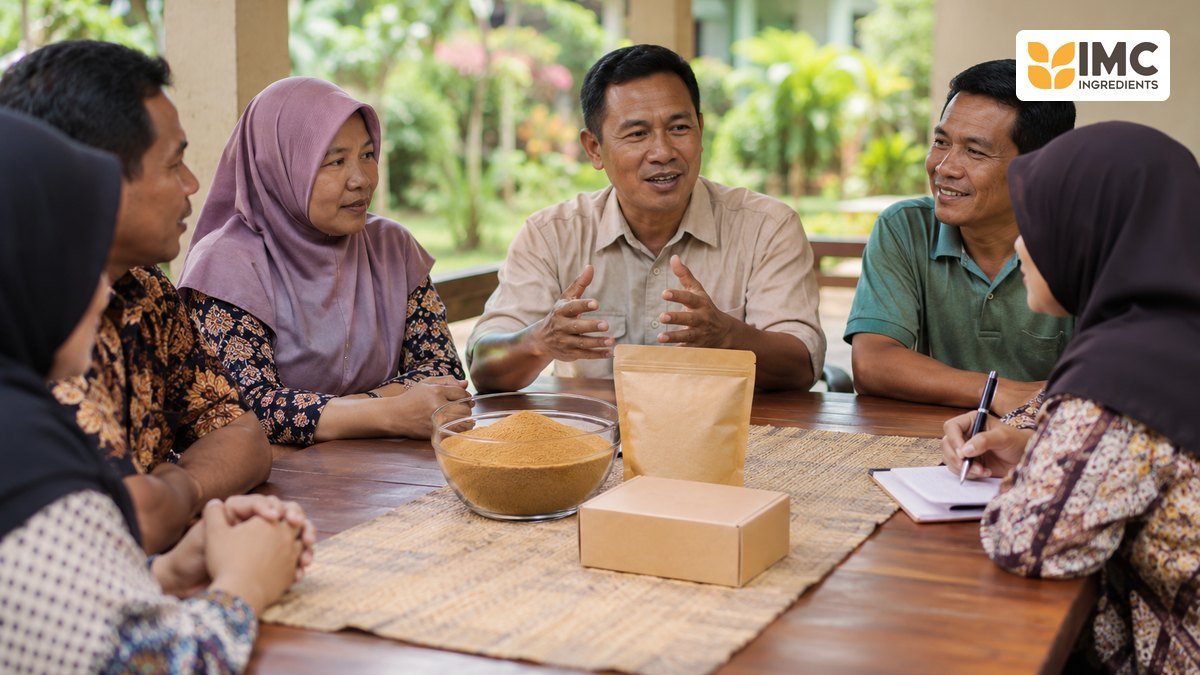
    Coconut sugar starts in villages, where tappers collect sap and families cook it. Farmer groups or collectors bring the product to factories, where it is dried, sieved, packed and exported. Each step creates work locally.

    How demand affects villages

    Situation Possible effect
    Steady demand Regular income, planning possible
    Growing demand More households join, more work
    Falling demand Lower income, uncertainty
    Quality requirements Training needs, better tools
    Certification demand Organic group management, records

    Benefits of export markets

    1. Access to buyers beyond the local market.
    2. Incentives to improve quality and hygiene.
    3. Organic certification opportunities.
    4. Support from partners for training and tools.

    Risks and responsibilities

    Export markets can be volatile. Prices, currency changes and buyer trends affect demand. Suppliers and buyers share responsibility to communicate early, plan volumes and avoid sudden cuts that hurt households.

    IMC’s CSR context

    IMC sources from farmer communities in Central Java. CSR activities include tool renewal with PUR Projet in 2023 in Banyumas, Purbalingga, Cilacap and Kebumen, and a GIZ develoPPP partnership since 2025 covering training, safer work, organic certification and dwarf coconut.

    What buyers can do

    Share realistic forecasts, keep long-term contracts where possible, pay on time and support supplier programmes. Ask suppliers how they communicate with farmer groups about changes in demand.

    Avoiding simplistic stories

    Marketing stories about villages should be accurate. Avoid invented anecdotes or quotes. Describe real programmes and use photos with consent.

    Looking ahead

    As more food companies look for traceable natural ingredients, demand for coconut sugar may continue to develop. Villages that are organised in groups, keep good records and maintain quality are better placed to benefit from this demand.

    Quality as a shared goal

    Export buyers expect consistent quality, clean product and clear documents. Meeting these expectations requires training, good tools and steady communication between factory and farmer groups. When quality improves, the whole chain benefits through fewer rejections and more reliable orders.

    Where does IMC fit?

    PT Integral Mulia Cipta (IMC Group) has produced coconut sugar in Central Java, Indonesia, since 2012. IMC exports mesh 14 and mesh 50 coconut sugar, including organic, and works with farmer communities through CSR programmes.

    FAQ

    How does export demand help villages? It supports income, jobs and investment in quality.

    What are the risks? Sudden changes in demand and prices.

    How can buyers help? Through forecasts, long-term contracts and timely payment.

    Should marketing use village stories? Only accurate stories, with consent for photos.


    PT Integral Mulia Cipta (IMC Group) has produced organic coconut sugar in Central Java, Indonesia, since 2012. For specifications or samples, email info@organic-coconut-sugar.com or WhatsApp +62 821 1348 5564.
  • What a Coconut Sugar COA Should Include

    What a Coconut Sugar COA Should Include

    Quick answer: A certificate of analysis (COA) for coconut sugar shows the test results for a specific lot. It should include product name and grade, lot code, production and best before dates, test parameters, specification limits, results, test methods and the name of the person who approved it. The COA must match the bags and shipping documents.

    Key takeaways – A COA belongs to one lot. – It lists parameters, limits and results. – Methods and approver should be shown. – Lot code must match bags and documents.

    Why the COA matters

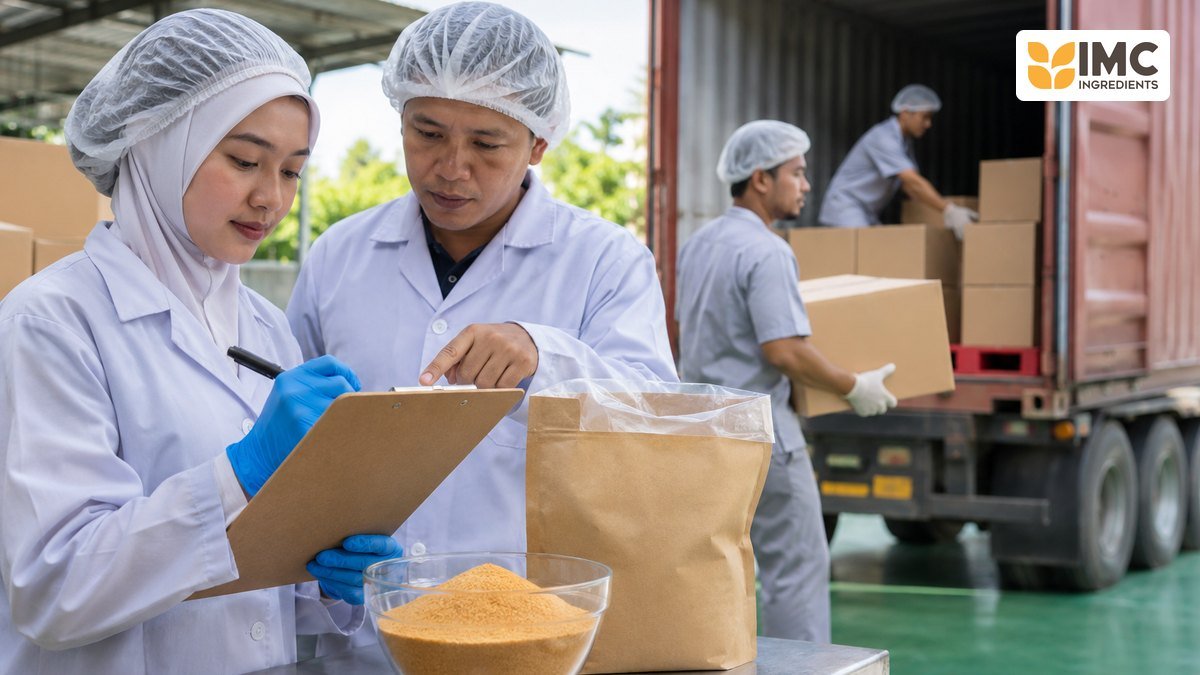
    The COA is the supplier’s statement that the lot meets the agreed specification. Buyers use it to release goods into production, compare lots and investigate problems. A clear COA saves time at the buyer’s quality department.

    Typical COA content

    Section Content
    Header Supplier name, address, document title
    Product Name, grade, organic status
    Lot data Lot code, production date, best before
    Physical Moisture, colour, particle size
    Chemical Sucrose or total sugars, ash where agreed
    Microbiological Total plate count, yeasts and moulds, pathogens
    Methods Reference for each test
    Conclusion Conforms or does not conform
    Approval Name, signature, date

    The exact parameters depend on the agreed specification.

    Specification versus COA

    The specification states the agreed limits. The COA shows the actual results for a lot. A buyer should compare the two. If a parameter is in the specification, it should appear on the COA unless agreed otherwise.

    In-house or external tests

    Some tests are done in the factory laboratory, others by an external laboratory. The COA should make clear which results come from where. External reports can be attached when requested.

    Checking a COA on arrival

    1. Check the lot code against the bags.
    2. Compare results with the specification.
    3. Check the dates and signature.
    4. File the COA with the delivery records.
    5. Raise questions straight away if something is unclear.

    Common problems

    • COA for the wrong lot.
    • Missing parameters.
    • Results without units.
    • No approval or date.

    Organic shipments

    For organic coconut sugar, the COA is separate from organic certificates and import documents. Buyers need both.

    Using COA data over time

    Collect COA results in a spreadsheet by lot. Trends in moisture or colour can show seasonal patterns or process changes. Sharing these trends with the supplier helps both sides plan and improve.

    Where does IMC fit?

    PT Integral Mulia Cipta (IMC Group) has produced coconut sugar in Central Java, Indonesia, since 2012. IMC supplies mesh 14 and mesh 50 coconut sugar, including organic, with a COA per lot based on the agreed specification.

    FAQ

    Is a COA the same as a specification? No, the COA shows results for one lot.

    What tests appear on a COA? Those agreed in the specification.

    Must the lot code match the bags? Yes, always.

    Is the COA enough for organic imports? No, organic documents are also needed.


    PT Integral Mulia Cipta (IMC Group) has produced organic coconut sugar in Central Java, Indonesia, since 2012. For specifications or samples, email info@organic-coconut-sugar.com or WhatsApp +62 821 1348 5564.