
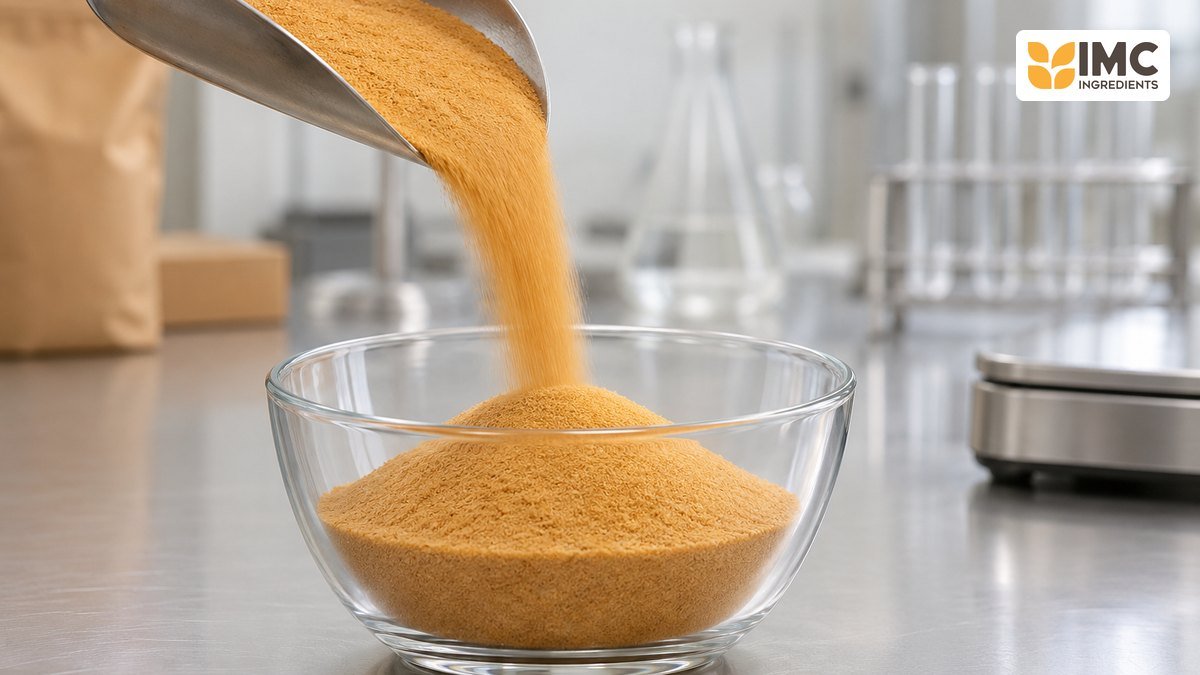
Quick answer: A sugar flows freely when its granules are dry, fairly even in size and not stuck together. Low moisture, controlled humidity, sealed packaging and good storage keep coconut sugar free-flowing. When moisture rises, granule surfaces become sticky and form bridges, which leads to lumps and blocked hoppers.
Key takeaways – Dry, even granules flow best. – Humidity is the main enemy of flow. – Sealed packaging and dry storage protect flow. – Simple tests can spot problems early.
Why flow matters in production
Automatic dosing systems, hoppers and screw feeders need ingredients that flow steadily. If sugar clumps, dosing becomes inaccurate, lines stop and staff must break lumps by hand. For dry mixes and coated products, poor flow also leads to uneven distribution.
Factors that affect flow
| Factor | Effect on flow |
|---|---|
| Moisture content | Higher moisture means stickier granules |
| Air humidity | Moist air is absorbed by the sugar |
| Particle size | Very fine powders can pack and bridge |
| Temperature changes | Can cause moisture to move and form cakes |
| Storage pressure | Heavy stacks compress bottom bags |
| Time | Long storage raises caking risk |
Why coconut sugar needs care
Coconut sugar takes up moisture more easily than refined white sugar, because it contains small amounts of other sugars and natural compounds. It flows well when dry and well packed, but needs more attention to storage conditions.
How to keep sugar flowing
- Store bags sealed until use.
- Keep the warehouse dry and well ventilated.
- Avoid big temperature swings.
- Do not stack too high.
- Use first in, first out stock rotation.
- Reseal opened bags tightly.
- Keep hoppers covered.
Flow aids
Some products use flow agents such as starch or silica, where local rules allow. These are added in the customer’s process, not usually to plain coconut sugar. Any addition must be declared on the label.
Simple flow tests
- Pour test: pour a set amount through a funnel and time it.
- Squeeze test: squeeze a handful; free-flowing sugar falls apart.
- Hopper check: watch for bridging or rat-holing during use.
- Moisture test: check moisture on arrival and before use.
Breaking up mild lumps
If a bag shows light clumping, sieve it before use. Do not add water or heat it in the bag. Find the cause, such as a damaged liner or damp storage, so the problem does not return.
Line design that helps flow
Hopper shape also matters. Steep walls and smooth stainless surfaces help sugar slide rather than stick. Short transfer distances and covered conveyors reduce contact with humid air. Talk to equipment makers about designs that suit slightly sticky ingredients.
Where does IMC fit?
PT Integral Mulia Cipta (IMC Group) has produced coconut sugar in Central Java, Indonesia, since 2012. IMC dries and sieves mesh 14 and mesh 50 coconut sugar, including organic, and packs it in paper bags with a food-grade PE liner to protect flow.
FAQ
Why does coconut sugar clump? It absorbs moisture from humid air.
How can I keep it flowing? Store sealed, dry and with stock rotation.
Can I add a flow agent? Yes, where your local rules allow, and declare it.
What should I do with lumps? Sieve the sugar and fix the storage cause.
PT Integral Mulia Cipta (IMC Group) has produced organic coconut sugar in Central Java, Indonesia, since 2012. For specifications or samples, email info@organic-coconut-sugar.com or WhatsApp +62 821 1348 5564.